
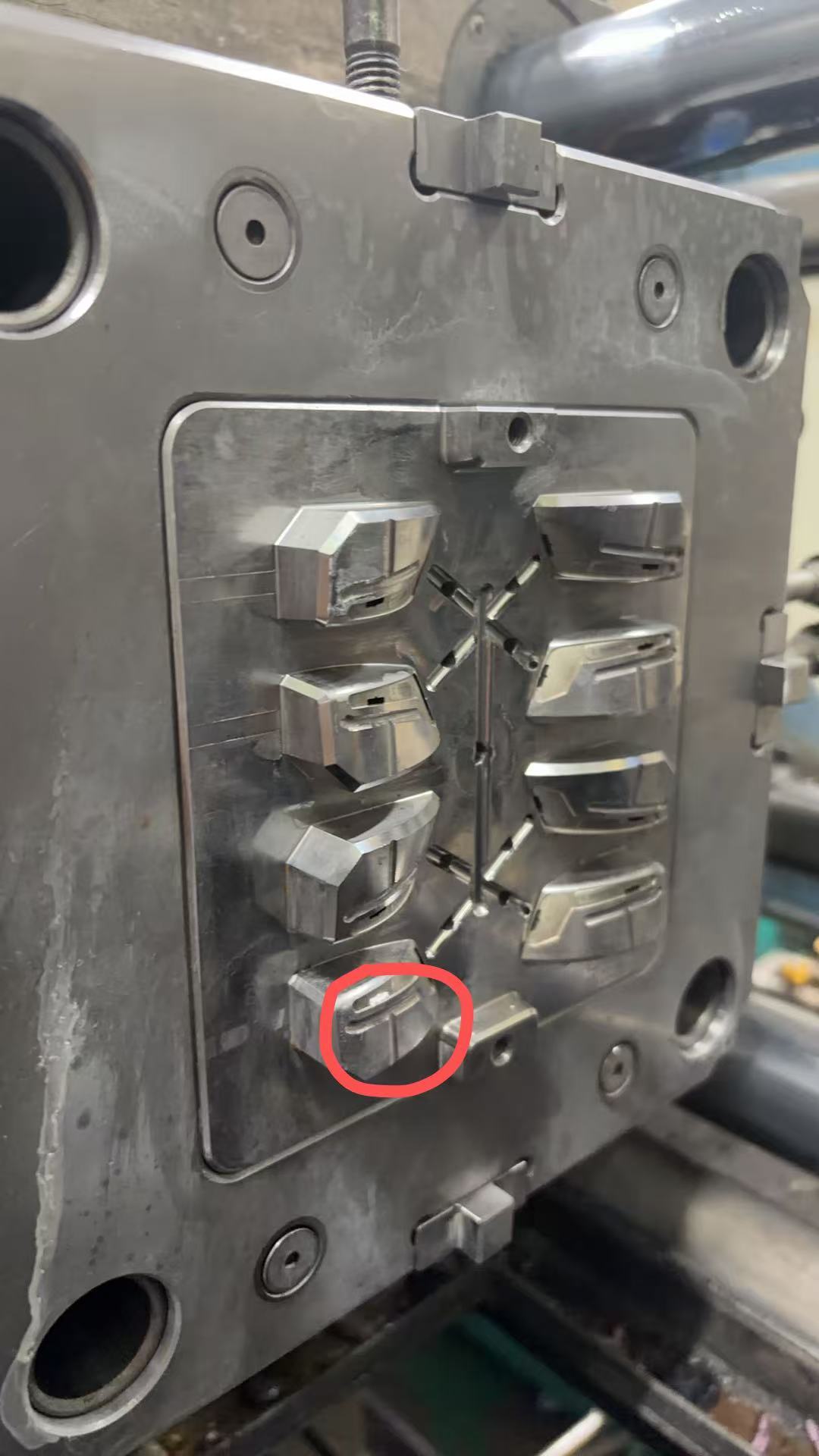
Poor injection mold release can quickly turn a stable molding process into a production problem. Parts may stick to the core, require too much ejector force, leave drag marks, or deform during ejection. In serious cases, ejector pins may bend or break. The root cause is not always the mold surface. Draft angle, shrinkage, packing pressure, mold temperature, material behavior, and ejector design can all affect release. For engineers and buyers, the goal is to find the real cause instead of relying on more release agent or higher ejector force.
What Causes Poor Injection Mold Release?
Poor injection mold release usually comes from one or more mechanical or process factors. The most common issue is that the molded part grips the core too tightly after cooling.
Plastic shrinks as it cools. If the part has deep walls, ribs, bosses, or a large core area, this shrinkage can create strong holding force.
Other common causes include:
- insufficient draft angle;
- rough core surfaces;
- excessive packing pressure;
- low mold temperature in some materials;
- deep ribs or bosses;
- vacuum between the part and core;
- poor ejector position;
- insufficient ejector area;
- plastic material with high shrinkage;
- damaged or dirty mold surfaces.
Before changing molding parameters, engineers should first identify where the part is sticking.
If the part always grips one local feature, the mold design may be the main cause. If the whole part becomes difficult to eject after process changes, pressure, cooling, or shrinkage may be involved.
A good injection mold design should consider release and ejection before steel cutting begins.
How Does Draft Angle Affect Part Release?
Draft angle reduces friction between the molded plastic and the mold surface.
Without enough draft, the part must slide along the steel during ejection. This creates high friction and may leave scratches or drag marks.
Deep walls usually need more draft than short walls.
Textured surfaces also need more draft because the plastic enters the texture during molding.
Typical draft needs depend on:
- wall depth;
- texture;
- plastic material;
- shrinkage;
- surface finish;
- part geometry.
For example, a smooth ABS housing may release with less draft than a deeply textured part.
If a customer wants very little draft for appearance reasons, engineers should check whether the mold can still eject the part safely.
Why Can the Part Stick More After Cooling?
Cooling increases material shrinkage.
As the plastic shrinks, it may grip the core more tightly.
This often happens on:
- deep housings;
- cylindrical parts;
- tall ribs;
- screw bosses;
- core pins;
- long internal walls.
The problem may become worse if the cavity side releases first and the entire part contracts around the core.
That is why mold designers must control which side the part stays on when the mold opens.
How Can Mold Design Improve Injection Mold Release?
Good injection mold release starts with the mold structure. Ejector pins cannot solve every sticking problem if the part geometry creates too much holding force.
The mold designer should review draft, surface finish, core shape, ribs, bosses, ejector layout, and air release.
A stable design reduces the ejection force before production begins.
How Should Ejector Pins Be Positioned?
Ejector pins should push on strong areas of the plastic part.
Good locations often include:
- ribs;
- bosses;
- thicker walls;
- reinforced flat areas.
Avoid placing high ejector force on thin cosmetic surfaces.
If there are too few ejector pins, each pin must carry more force. This can cause:
- ejector marks;
- white stress marks;
- part deformation;
- broken pins.
Increasing the number or diameter of ejector pins can improve release, but only when the part structure allows it.
The ejector layout should also distribute force evenly.
If one side moves before the other, the part may tilt and drag against the core.
When Should a Stripper Plate or Sleeve Be Used?
Some parts need a larger ejection area than normal pins can provide.
Round parts are a common example.
A stripper plate or ejector sleeve can spread force over a wider surface.
This is useful for:
- caps;
- round housings;
- deep cylindrical parts;
- parts with a central core;
- parts that cannot tolerate pin marks.
The correct ejection method should be decided during mold design rather than added after repeated trial problems.
Can Air Help Release the Part?
Yes.
Some parts form a vacuum between the plastic and the core.
This can make a part difficult to eject even when draft is acceptable.
Air poppets or air-assisted ejection can break the vacuum before or during ejection.
They are especially useful for deep cups or large flat surfaces.
However, the air system must be designed carefully. Poor timing can damage the part or make ejection unstable.
How Do Process Settings Affect Injection Mold Release?
Poor injection mold release is not always caused by the mold itself. Injection pressure, holding pressure, cooling time, and mold temperature can change how tightly the part grips the core.
During T1, engineers should adjust one factor at a time.
This makes it easier to separate a tooling issue from a process issue.
A structured injection mold trial process helps identify these problems before mass production.
Can Too Much Packing Pressure Cause Sticking?
Yes.
High holding pressure pushes more material into the cavity.
This can improve sink marks and dimensions, but it can also increase the force between the plastic and the steel.
Too much packing may cause:
- higher part weight;
- more internal stress;
- difficult ejection;
- flash;
- longer cooling time.
If a part begins sticking after holding pressure increases, engineers should check whether the pressure is higher than necessary.
The goal is enough packing to control shrinkage, not maximum pressure.
Does Mold Temperature Affect Release?
Yes.
Mold temperature changes shrinkage, surface quality, and stiffness at ejection.
If the part ejects while it is still too soft, it may deform or drag.
If it stays in the mold too long, additional shrinkage may cause stronger grip on the core.
The best ejection point depends on:
- plastic type;
- wall thickness;
- part shape;
- core depth;
- cycle time.
This is one reason production trials should run enough cycles to reach stable mold temperature.
Can Injection Speed Affect Release?
Indirectly, yes.
Injection speed affects filling, pressure, and internal stress.
A poor filling pattern may create uneven shrinkage.
This can make one area grip the mold more strongly than another.
However, changing injection speed should not be the first response to a clear mechanical sticking problem.
First check draft, surface condition, ejector layout, and geometry.
How Does Mold Surface Condition Affect Injection Mold Release?
Stable injection mold release depends heavily on surface condition. A surface that looks acceptable may still create too much friction during ejection.
Polishing level should match the plastic and part requirement.
A very rough steel surface can increase drag.
However, polishing in the wrong direction can also make release worse.
For deep cores, polishing marks should normally follow the release direction where possible.
Can Over-Polishing Cause Problems?
Yes.
A mirror-polished surface can sometimes create a vacuum effect on large smooth areas.
This is more likely on:
- deep cup-shaped parts;
- large flat surfaces;
- transparent parts;
- tight-fitting cores.
In these cases, better venting or air-assisted release may help more than additional polishing.
Surface finish should therefore match the part geometry, not simply use the highest polish level.
Why Does Mold Cleaning Matter?
Residue can slowly change the mold surface.
Plastic additives, oil, dust, and degraded material may collect on the core or cavity.
This can increase friction and change part release over time.
Routine injection mold maintenance should include cleaning, lubrication, vent inspection, ejector inspection, and surface checks.
If a mold released well at the beginning but later starts sticking, contamination or wear should be checked before changing the process.
Can Mold Damage Cause Parts to Stick?
Yes.
Small scratches, dents, burrs, or damaged shut-off areas can mechanically hold the plastic.
This is especially common after:
- ejector pin damage;
- incorrect polishing;
- steel repair;
- foreign material trapped in the mold;
- repeated wear.
Repair should restore the original release direction and surface condition.
When Should You Use Mold Release Agent?
A mold release agent can help some injection mold release problems, but it should not become the main solution for a poor mold design.
Release agents create a thin layer between the plastic and the mold surface.
They can be useful during:
- early mold trials;
- difficult startup;
- temporary troubleshooting;
- special materials;
- low-volume production.
However, frequent use may create other issues.
Possible problems include:
- surface contamination;
- paint adhesion problems;
- printing or bonding issues;
- deposit buildup;
- inconsistent part appearance.
For this reason, release agent should usually support the process, not replace proper draft and ejection design.
When Is Release Agent a Warning Sign?
If operators need to spray release agent every few cycles, something else may be wrong.
Engineers should check:
- draft angle;
- core polish;
- ejector layout;
- cooling;
- holding pressure;
- part shrinkage;
- surface damage.
A production mold should ideally run with stable automatic ejection.
For injection molding production, repeated manual spraying can increase cycle time and reduce process consistency.
How Should Engineers Troubleshoot Parts Sticking During T1?
During T1, injection mold release should be checked from the first stable shots.
Do not wait until the final sample stage.
A simple troubleshooting process is:
- Identify exactly where the part sticks.
- Check draft and surface direction.
- Review ejector location and force.
- Check holding pressure and cooling time.
- Inspect for vacuum.
- Review mold temperature.
- Check mold surface damage.
- Run enough cycles to confirm the result.
For example, imagine an ABS housing that sticks on four deep screw bosses during T1.
The first action should not be to add more release agent.
The engineering team should check:
- boss draft;
- core pin polish;
- holding pressure;
- boss wall thickness;
- ejector support near the bosses.
If the problem stays in the same four areas, a mold change may be more effective than a process change.
When Is Mold Modification Necessary?
Mold modification may be needed when:
- draft is too small;
- ejector area is insufficient;
- the core surface has the wrong finish;
- the part creates strong vacuum;
- ribs or bosses grip the core;
- the ejection direction is poor.
Possible changes include:
- adding draft;
- increasing ejector area;
- adding ejector pins;
- adding air assistance;
- polishing the core;
- changing local geometry.
The decision should focus on stable long-term production, not only getting one T1 sample out of the mold.
FAQ About Injection Mold Release
Why Does My Plastic Part Stay on the Wrong Mold Side?
The part may shrink more strongly around one side of the mold.
Surface finish, draft, cavity depth, and geometry all affect which side holds the part.
Mold designers often adjust surface condition and core geometry so the part stays on the ejector side.
Can More Draft Always Solve Sticking?
Not always.
More draft can reduce friction, but other causes may still remain.
Poor polishing, vacuum, high packing pressure, deep ribs, and weak ejection can also create sticking.
Why Do Ejector Marks Appear When a Part Sticks?
When the part needs too much force to release, the ejector pins press harder against the plastic.
This can leave visible circles, dents, or white stress marks.
The solution is usually to reduce holding force or increase ejection area.
Should Mold Release Agent Be Used in Mass Production?
It can be used when necessary, but a stable production mold should not depend on frequent manual spraying.
Too much release agent can affect downstream painting, printing, bonding, or surface quality.
Can Mold Release Problems Break Ejector Pins?
Yes.
If the part grips the mold too strongly, ejector pins can bend or break.
This is why repeated high ejection force should be treated as a mold or process problem.
Conclusion
Good injection mold release depends on part design, mold surface, draft angle, shrinkage, ejector layout, and process settings working together.
When parts stick, engineers should first locate the exact holding area. Then they can separate mold design issues from process problems.
Release agent may help during trials, but it should not hide poor draft, weak ejection, or damaged mold surfaces.
For long-term production, stable automatic ejection is the real goal.
If your plastic part has sticking, drag marks, ejector damage, or difficult release during mold trials or production, contact us to review the part design, mold structure, and molding process.