An injection mold steel certificate helps buyers confirm whether the mold steel actually matches the material grade stated in the quotation, mold specification, or purchase agreement.
This sounds simple, but it matters.
A mold quotation may specify P20, 1.2343, H13, S136, NAK80, or another steel grade. However, once the mold is finished, buyers often focus on samples, dimensions, cycle time, and shipment. Few people ask how the supplier proves which steel was actually used.
For many molds, especially export molds and long-life production tools, steel records are worth checking before final acceptance.
What Is an Injection Mold Steel Certificate?
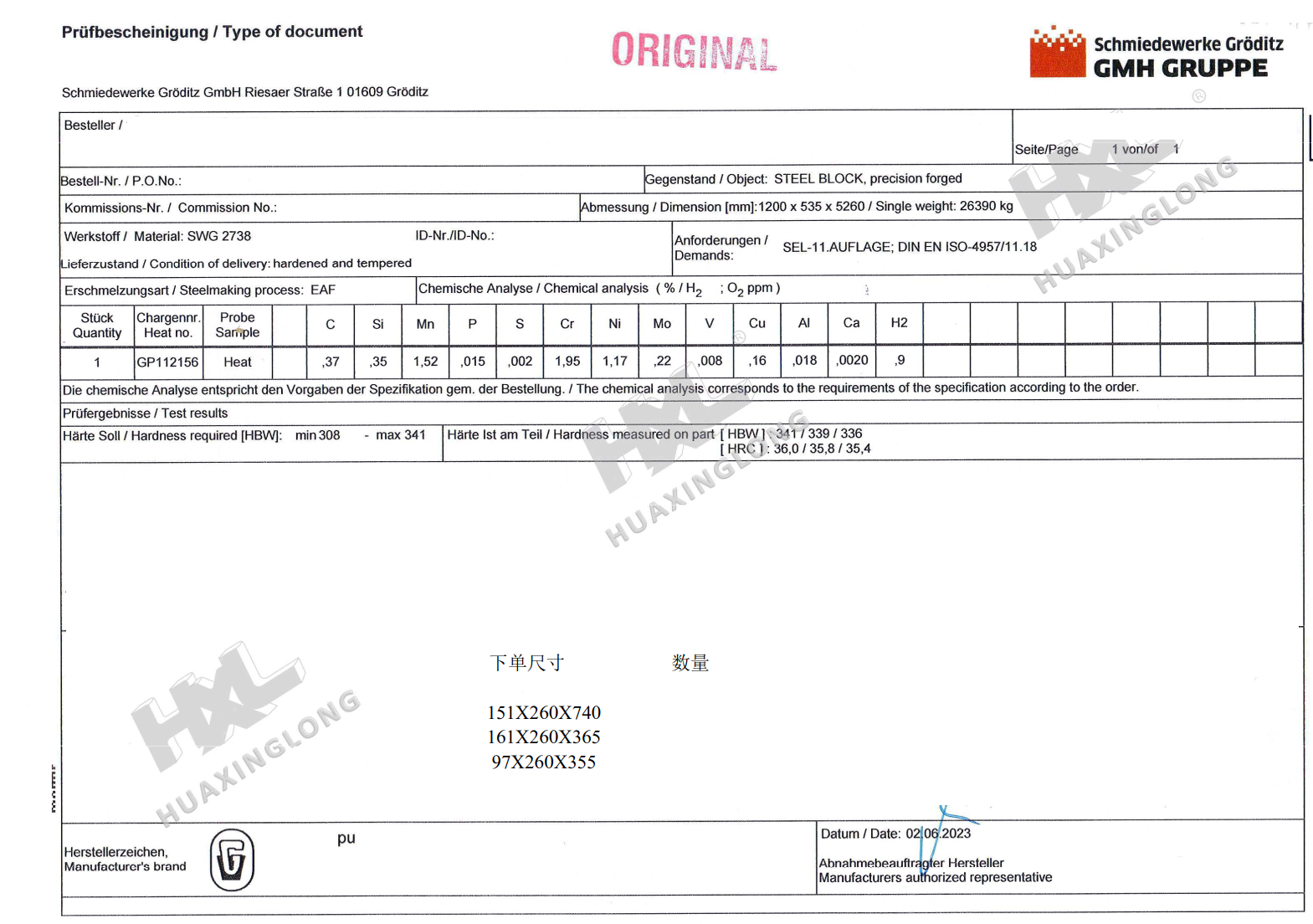
An injection mold steel certificate is a material record supplied by the steel manufacturer or distributor.
Depending on the supplier, it may show:
- Steel grade
- Heat number
- Chemical composition
- Material standard
- Delivery condition
- Hardness
- Heat treatment condition
- Steel mill or distributor information
The exact format varies.
The important point is that the record should connect the steel used in the mold with an identifiable material batch.
For buyers, the certificate provides supporting evidence that the steel grade matches the project requirement.
Why Mold Steel Grade Matters
Not every injection mold needs expensive premium steel.
However, the steel should match the expected mold life, plastic material, surface requirement, and mold structure.
For example, mold steel selection may change when the project involves:
- High production volume
- Glass-filled plastic
- Corrosive material
- High surface polish
- Transparent parts
- Textured surfaces
- High mold temperature
- Tight dimensional control
A low-volume mold may work well with a pre-hardened steel.
By contrast, a long-life mold running abrasive material may need a harder or more wear-resistant grade.
Therefore, steel grade affects more than the original mold price.
It can also affect maintenance, wear, polishing, repair, and long-term production stability.
Injection Mold Steel Certificate Should Match the Quotation
The first check is simple.
Compare the injection mold steel certificate with the mold quotation.
Suppose the quotation says:
Core and cavity: 1.2343 HRC 48–52
The material record should support that requirement.
If the certificate shows a different steel grade, the buyer should ask why.
Sometimes the change is reasonable.
For example, the supplier and customer may have approved an alternative steel during mold design.
However, the change should not happen without discussion.
The final mold should match the agreed specification.
Check the Core and Cavity Separately
A mold rarely uses only one type of steel.
Different components may use different materials.
For example:
| Mold Component | Possible Steel |
|---|---|
| Cavity insert | S136 / 1.2083 |
| Core insert | 1.2343 / H13 |
| Mold base plates | P20 / 1.2311 |
| Slider insert | Hardened tool steel |
| Wear plate | Hardened wear-resistant steel |
Therefore, buyers should not simply ask:
“Do you have a steel certificate?”
A better question is:
“Which mold components have material certificates, and which certificate belongs to each component?”
This becomes more important when critical inserts use different steel from the mold base.
Injection Mold Steel Certificate and Heat Numbers
A useful material certificate normally includes a heat number or batch number.
This number links the certificate back to a specific steel production batch.
In practice, the mold supplier should also keep enough information to connect that steel batch to the mold component.
For example:
- Mold No.: FM-26018
- Component: Cavity Insert
- Steel: 1.2343
- Heat No.: H2605187
This creates a much clearer record than simply sending a generic steel certificate.
If several molds use the same grade, the heat number helps identify which steel batch belongs to which project.
Hardness Should Also Be Confirmed
Steel grade alone is not enough when the mold requires heat treatment.
For example, a quotation may specify:
H13, hardened to HRC 48–52
In this case, the buyer should not only confirm that the steel started as H13.
The final hardness also matters.
A hardness record may include measurements from:
- Cavity insert
- Core insert
- Slider insert
- Other hardened components
The supplier can record these results after heat treatment and final machining.
This helps confirm that the component reached the required hardness.
Heat Treatment Records Can Be Important
For hardened mold components, heat treatment has a major effect on final performance.
Poor heat treatment can lead to:
- Cracking
- Distortion
- Low hardness
- Excessive brittleness
- Unstable dimensions
Therefore, important hardened components may need more than a basic material certificate.
Depending on the project, buyers can also ask for:
- Heat treatment supplier
- Treatment date
- Final hardness
- Treatment process
- Hardness inspection result
Not every simple mold needs this level of documentation.
However, high-value or long-life molds may benefit from it.
How Buyers Can Verify the Actual Steel Used
A certificate proves what material was purchased.
However, buyers may still ask:
How do we know that this steel was actually used in our mold?
This is a fair question.
The supplier can improve traceability by keeping:
- Steel purchase record
- Material certificate
- Heat number
- Component drawing
- Machining record
- Hardness record
- Mold assembly record
Photos can also help during mold manufacturing.
For example, the supplier may photograph the steel block before machining while the original material marking is still visible.
For critical projects, this creates a stronger connection between the steel certificate and the finished mold.
Material Markings Should Be Recorded Before Machining
Steel blocks often arrive with markings on the surface.
These may show:
- Steel grade
- Heat number
- Supplier
- Size
However, CNC machining may later remove those markings.
Therefore, recording them before machining is useful.
A simple photo of the raw steel with the mold number or component number can provide additional traceability.
This is especially useful when the buyer wants stronger proof of the steel used.
Injection Mold Steel Certificate Does Not Replace Hardness Testing
A material certificate and a hardness test serve different purposes.
The material certificate confirms the steel grade and original material batch.
The hardness test checks the condition of the finished component.
For example, the supplier may buy the correct H13 steel but fail to achieve the required hardness after heat treatment.
Therefore, buyers should not treat the two records as the same thing.
For hardened parts, both can be useful.
Should Every Mold Component Have a Certificate?
Usually, no.
That would create unnecessary paperwork.
The focus should be on important mold components.
Typical examples include:
- Main cavity inserts
- Main core inserts
- Critical sliders
- Critical lifters
- High-wear inserts
- Hardened shut-off inserts
Standard mold base plates, screws, springs, and common standard parts usually do not need individual steel certificates unless the project specifically requires them.
The level of documentation should match the project risk.
Injection Mold Steel Certificate Is More Important for Long-Life Molds
For a prototype mold running a few thousand shots, extensive steel documentation may add little value.
However, the situation changes when a mold must run hundreds of thousands of cycles.
Long-life molds depend more heavily on:
- Steel quality
- Heat treatment
- Hardness
- Wear resistance
- Corrosion resistance
- Maintenance
For these projects, an injection mold steel certificate gives buyers a clearer record of what they paid for.
This also helps later if the mold develops abnormal wear.
You can compare the material records with the findings from an injection mold wear inspection.
Steel Records Can Help During Mold Repair
Imagine a cavity insert becomes damaged several years later.
The repair factory needs to rebuild or replace it.
Knowing the original steel grade and hardness makes this much easier.
Without records, the repair shop may need to guess the steel or perform additional testing.
That can increase time and cost.
For this reason, steel certificates should remain part of the final mold documentation rather than disappearing after mold acceptance.
This is also why buyers should keep proper injection mold documentation.
Material Records Matter During Mold Transfer
Steel records become even more useful when a mold moves to another supplier.
The new factory may have no history with the tool.
They need to understand:
- Which steel was used
- Which components were hardened
- What hardness was specified
- Which areas were repaired
- Which inserts may need future replacement
If the documentation is complete, the new supplier can make better repair and maintenance decisions.
Without those records, they may need to inspect and test everything again.
Buyers Should Check Whether the Steel Grade Is Equivalent
Steel naming can sometimes create confusion.
Different countries and suppliers may use different standards.
For example, a quotation may refer to:
- DIN grade
- AISI grade
- JIS grade
- Chinese grade
- Brand-specific steel name
Two steels may be close, but not always identical.
Therefore, if the supplier proposes an equivalent grade, buyers should confirm the actual material before approval.
Do not rely only on a similar name.
Check whether the properties suit the application.
Avoid Choosing Steel Only by Brand Name
Buyers sometimes focus too heavily on the steel brand.
The steel source matters, but the complete result also depends on:
- Correct grade
- Heat treatment
- Hardness
- Machining
- Polishing
- Mold design
- Maintenance
Premium steel does not guarantee a good mold if the heat treatment or fitting is poor.
Likewise, the correct steel must still be processed correctly.
Therefore, the certificate should be one part of mold quality control, not the only part.
Injection Mold Steel Certificate Should Be Part of Final Delivery
Before mold shipment, buyers can ask the supplier to include relevant steel records in the final documentation package.
For important components, this may include:
| Record | What It Confirms |
|---|---|
| Steel certificate | Material grade and heat number |
| Hardness report | Final hardness |
| Heat treatment record | Treatment condition |
| Component list | Where each steel grade is used |
| Mold drawing | Final component information |
This does not need to become complicated.
A simple organized package is enough.
The main goal is to make future verification, maintenance, and repair easier.
What Should Buyers Verify Before Mold Acceptance?
Before approving a production mold, buyers can check:
- Does the mold steel match the quotation?
- Are the core and cavity steels identified?
- Are critical inserts included?
- Does the certificate show the steel grade?
- Is the heat number available?
- Was required heat treatment completed?
- Does the final hardness meet the specification?
- Are steel changes documented?
- Are the records linked to the correct mold?
- Will the buyer receive copies at delivery?
These checks can be included as part of the final injection mold acceptance.
What If the Supplier Cannot Provide a Certificate?
This does not automatically mean the steel is wrong.
Some small material purchases or local steel sources may not provide detailed mill certificates.
However, the supplier should still be able to explain:
- Where the steel came from
- Which grade was purchased
- How the steel was identified
- Whether hardness was checked
- What other supporting records are available
For important molds, this should be discussed before the mold is built.
If a buyer requires original mill certificates, that requirement should appear in the quotation or purchase agreement.
Waiting until final shipment can create unnecessary problems.
Final Thoughts
An injection mold steel certificate gives buyers useful evidence that the mold steel matches the agreed material grade.
For simple or low-volume molds, extensive steel records may not be necessary.
However, for long-life molds, hardened inserts, high-wear applications, and export tooling, material records become much more valuable.
Buyers should focus on the main cavity, core, and other critical components.
Then check whether the steel grade, heat number, heat treatment, and hardness match the agreed specification.
The goal is not to create more paperwork.
The goal is to know what steel is actually inside the mold before the tool enters years of production.