
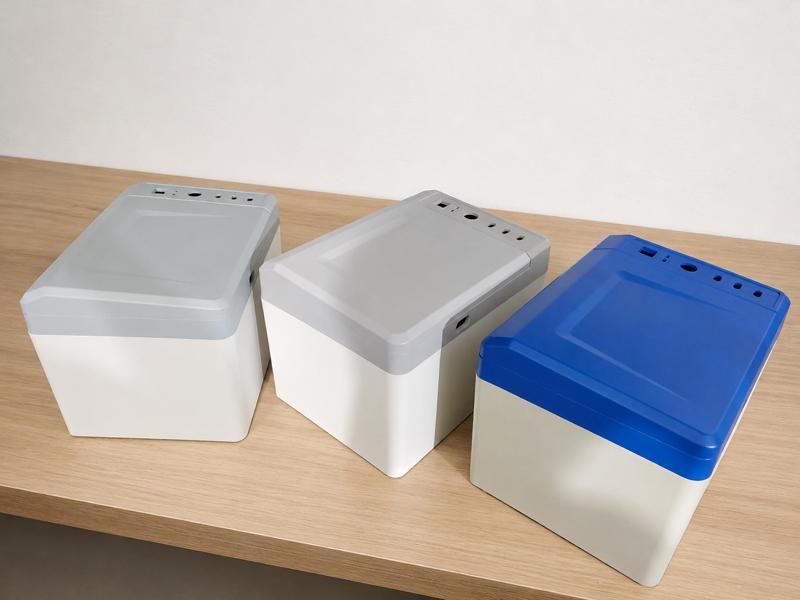
Machined plastic parts may look simple on a drawing. However, producing them accurately can be harder than machining metal.
Plastic reacts to heat, moisture, and clamping pressure. It may also move after material is removed. As a result, a tolerance that looks easy on a CAD drawing may be difficult to hold in production.
This matters even more when buyers need:
- low-volume production
- precision prototypes
- replacement components
- engineering plastic parts
- tight-fit assemblies
- PEEK, POM, nylon, PTFE, PC, or other technical plastics
Therefore, choosing a supplier is not only about machine capability. The supplier must also understand how plastic behaves during cutting and inspection.
In this guide, we explain how to source machined plastic parts, choose the right material, set realistic tolerances, and evaluate a machining supplier.
What Are Machined Plastic Parts?
Machined plastic parts are made by cutting material away from plastic stock.
Common machining processes include:
- CNC milling
- CNC turning
- drilling
- boring
- tapping
- threading
- routing
- grinding
Unlike injection molding, CNC machining does not require a mold. Therefore, it is often a good choice for prototypes and small production runs.
Typical applications include:
- prototypes
- small batches
- replacement parts
- engineering fixtures
- large low-volume parts
- designs that may still change
In many cases, machining is the fastest way to move from CAD to a functional plastic part.
However, the unit cost becomes less attractive when production volume increases.
1. Material Selection Affects Machining Results
First, the plastic material must match the application.
Different plastics behave differently during machining. Some are stable and easy to cut. Others deform, absorb moisture, or generate more heat.
Therefore, material selection affects:
- dimensional accuracy
- surface finish
- cutting speed
- tool wear
- burr formation
- flatness
- final part stability
Before machining starts, the supplier should know the exact resin or plastic grade.
Common Materials for Machined Plastic Parts
| Material | Main Advantages | Common Machining Concerns |
|---|---|---|
| POM / Acetal | Good dimensional stability and low friction | Generally easy to machine |
| PEEK | High heat and chemical resistance | Expensive material; heat control is important |
| Nylon | Strong and wear resistant | Moisture can change dimensions |
| PTFE | Excellent chemical resistance | Soft and easy to deform |
| PC | Tough and available in transparent grades | Heat and internal stress must be controlled |
| ABS | Economical and easy to machine | Can soften if cutting heat is too high |
| UHMW-PE | Excellent wear resistance | Flexible and harder to hold tightly |
| PVC | Good chemical resistance | Heat must be controlled |
| Acrylic / PMMA | Good transparency | Can crack or chip |
| PEI / Ultem | Good strength and heat resistance | Requires stable cutting conditions |
For example, POM is usually easier to machine than PTFE because it is more rigid and dimensionally stable.
Meanwhile, nylon may change size after machining because it absorbs moisture.
If a machined prototype will later become an injection molded part, material choice also matters for final production. You can compare common production resins in our Injection Molding Materials Guide.
2. Plastic Behaves Differently From Metal
Machining plastic with the same assumptions used for metal often causes problems.
There are three main reasons.
Thermal Expansion
Plastic usually expands more than steel or aluminum.
Heat may come from:
- the cutting process
- the machine
- coolant
- room temperature
- handling
Therefore, a part measured immediately after machining may not have the same size later.
Elastic Deformation
Plastic can bend under clamping pressure.
For example, a vise may hold the part flat during machining. However, once the part is released, it may move back toward its natural shape.
As a result, a part can appear correct while it is still clamped but become inaccurate afterward.
Internal Stress
Plastic stock may contain internal stress from extrusion or previous processing.
When material is removed, that stress can be released.
This may cause:
- bending
- twisting
- warpage
- flatness changes
- dimensional drift
Therefore, thin or asymmetric machined plastic parts need careful machining strategies.
3. What Tolerances Are Realistic for Machined Plastic Parts?
Buyers often ask how tight CNC machining tolerances can be.
However, there is no single answer.
Tolerance capability depends on:
- material
- part size
- geometry
- wall thickness
- machining method
- room temperature
- moisture
- inspection conditions
In general, larger and thinner parts are harder to control.
Soft materials are also more difficult because they can deform during machining and inspection.
Therefore, suppliers should review critical dimensions one by one.
Do Not Over-Tolerance the Drawing
Tighter tolerances increase cost.
They may also increase:
- machining time
- inspection time
- scrap rate
- production risk
Instead, divide dimensions into different groups.
Critical Dimensions
These may control:
- assembly
- sealing
- shaft position
- bearing fit
- hole location
- mating surfaces
Secondary Dimensions
These affect fit but are not usually critical to function.
Non-Critical Dimensions
These mainly define general shape or clearance.
Therefore, tight tolerances should only be applied where they are actually needed.
If the part may later move into molding, our Injection Molding Tolerances Guide explains how tolerance planning changes for molded parts.
4. Moisture Can Change Plastic Dimensions
Some plastics absorb moisture from the environment.
Nylon is a common example.
A dry nylon part may increase slightly in size after it absorbs moisture.
Therefore, buyers should ask:
- Was the material dry or conditioned?
- When was the part measured?
- At what temperature was it measured?
- Will the part work in a humid environment?
- Should the final dimensions be checked after conditioning?
These questions become more important when tolerances are tight.
For example, a dimension that passes inspection immediately after machining may move later because of moisture absorption.
5. Flatness Can Be Harder Than Length or Diameter
Flatness is often difficult to control in plastic parts.
This is especially true for large plates and thin housings.
Common causes include:
- internal stress
- cutting heat
- uneven material removal
- fixture pressure
- thin walls
For example, machining a large pocket on only one side of a plastic plate can release internal stress.
As a result, the part may bend after machining.
A better process may include:
- rough machining
- resting the part
- flipping the workpiece
- balancing material removal
- semi-finishing
- another stabilization period
- final finishing
Although this takes more time, it can improve dimensional stability.
6. Thin Walls Need Careful Machining
Thin plastic walls can move easily during cutting.
Common problems include:
- vibration
- bending
- melting
- poor surface finish
- dimensional variation
- deformation after unclamping
Therefore, the supplier may need to use:
- lighter cuts
- sharper tools
- lower cutting heat
- custom fixtures
- soft jaws
- support blocks
- slower finishing passes
In addition, the part design itself may need changes.
If a thin wall is not required for function, increasing the thickness can make machining much more stable.
7. Surface Finish Depends on the Material
Surface finish varies between plastics.
Buyers may require:
- standard CNC finish
- smooth cosmetic finish
- polished surfaces
- transparent polished surfaces
- specific roughness
However, machining alone does not always create a cosmetic surface.
Surface quality depends on:
- cutter type
- tool sharpness
- spindle speed
- feed rate
- material
- final finishing pass
For transparent plastics such as acrylic or PC, additional polishing may be needed.
Therefore, cosmetic requirements should be included in the RFQ.
8. Burr Control Matters on Plastic Parts
Plastic can create burrs during machining.
Soft materials may stretch rather than cut cleanly.
Burrs are often found around:
- holes
- slots
- threads
- thin edges
- cross holes
Poor deburring may cause:
- assembly problems
- loose particles
- cosmetic defects
- inaccurate dimensions
Therefore, the supplier should use a controlled deburring process.
At the same time, excessive manual deburring should be avoided because it can damage precision features.
9. Threads Need the Right Design
Many machined plastic parts include threaded holes or external threads.
Common options include:
- direct plastic threads
- tapped threads
- metal inserts
- threaded inserts
Direct threads may work well for light loads.
However, metal inserts are often better when the part needs:
- repeated assembly
- higher torque
- longer service life
- stronger connections
Therefore, the thread design should match the real assembly load.
10. CNC Milling vs CNC Turning
The part shape usually determines the machining method.
CNC Milling
CNC milling is suitable for:
- housings
- brackets
- plates
- pockets
- complex shapes
- hole patterns
CNC Turning
CNC turning works well for:
- bushings
- rings
- spacers
- rollers
- cylindrical parts
- round threaded parts
Sometimes both methods are required.
For example, a round POM component may first be turned and then moved to a milling machine for holes or slots.
11. Machined Plastic Parts vs Injection Molded Parts
Machining and injection molding serve different production needs.
| Factor | CNC Machining | Injection Molding |
|---|---|---|
| Tooling cost | Low | Higher |
| Lead time | Short | Longer |
| Design changes | Easy | More difficult |
| Low volume | Very suitable | Often less economical |
| High volume | Higher unit cost | Lower unit cost |
| Local tight tolerances | Often very good | Depends on shrinkage |
| Complex molded features | Limited | Very suitable |
| Repeat production | Good | Excellent after validation |
Therefore, CNC machining is often better for prototypes and low-volume programs.
Injection molding usually becomes more attractive when quantity increases.
You can read more about that transition in our CNC Machining Plastic Parts for Prototypes and Low Volume Production.
12. What Should Buyers Send for a Machining Quote?
A complete RFQ helps the supplier quote accurately.
3D CAD File
Common formats include:
- STEP
- STP
- X_T
- IGES
2D Drawing
The drawing should show:
- tolerances
- threads
- critical dimensions
- surface requirements
Material
Specify the exact material when possible.
For example:
POM-C natural
is more useful than simply writing:
plastic
Quantity
Include:
- prototype quantity
- first order quantity
- annual volume
Surface Requirements
State whether you need:
- polishing
- blasting
- printing
- laser marking
Inspection Requirements
You may also need:
- dimensional reports
- CMM reports
- material certificates
- first article inspection
Because these requirements affect cost, they should be stated before quotation.
13. How to Choose a Machined Plastic Parts Supplier
Price is important. However, it should not be the only factor.
A good supplier should understand both machining and plastic behavior.
Check Material Experience
Ask whether the supplier has worked with your exact plastic.
For example, good experience with POM does not automatically mean the supplier is experienced with PTFE or PEEK.
Check Plastic Machining Knowledge
The supplier should understand:
- heat
- deformation
- moisture
- internal stress
- burrs
- fixture pressure
Review Fixture Design
Fixtures are especially important for:
- large parts
- thin parts
- soft plastics
- repeat production
Therefore, buyers should ask how the part will be held during machining.
Check Inspection Capability
Useful inspection equipment may include:
- calipers
- micrometers
- pin gauges
- height gauges
- optical measuring systems
- CMM
However, equipment alone is not enough.
The supplier should also understand how temperature and material condition affect measurements.
14. Ask Which Dimensions Are Difficult
One useful question is:
Which dimensions on this drawing are the hardest to control?
A good supplier should be able to identify risks such as:
- thin walls
- large flat surfaces
- deep pockets
- tight hole positions
- difficult threads
- unsupported features
Therefore, technical discussion before production can prevent expensive problems later.
If a supplier says every dimension is easy without reviewing the material and geometry, that may be a warning sign.
15. Start With a Small Batch
For a new design, it is often safer to order a small first batch.
For example, 5–20 parts may be enough to test:
- fit
- assembly
- dimensions
- appearance
- function
After approval, production can increase.
As a result, buyers can reduce the risk of producing a larger batch with a design problem.
16. When Should You Move From CNC to Injection Molding?
There is no fixed quantity where machining suddenly becomes too expensive.
The decision depends on:
- geometry
- material
- machining time
- mold cost
- annual volume
- design maturity
However, injection molding becomes more attractive when:
- the design is stable
- annual demand increases
- machining time is high
- material waste becomes expensive
- repeat orders are expected
At that point, building an injection mold may reduce the long-term cost per part.
In many projects, the best path is:
CNC prototype → design validation → production mold → injection molding
This approach reduces tooling risk because the design is tested before production tooling begins.
Common Problems With Machined Plastic Parts
Warpage
Possible causes include:
- internal stress
- uneven machining
- excessive heat
- poor fixtures
Dimensions Change After Machining
Possible causes include:
- temperature
- moisture
- stress relaxation
Cracked Holes or Threads
Possible causes include:
- excessive cutting force
- brittle material
- incorrect tool geometry
Poor Surface Finish
Possible causes include:
- dull tools
- excessive heat
- poor feed rate
- weak finishing passes
Burrs
Possible causes include:
- soft material
- incorrect cutters
- poor deburring
Therefore, the supplier should explain both the problem and the root cause.
Machined Plastic Parts Supplier Checklist
Before placing an order, confirm:
- Can the supplier machine the exact plastic grade?
- Have they reviewed the drawing?
- Are the tolerances realistic?
- How will the part be held?
- Which dimensions are difficult?
- How will critical dimensions be inspected?
- Are material certificates available?
- Can inspection reports be provided?
- Can the supplier handle secondary operations?
- Can the project move into injection molding later?
A supplier that understands the full production path can often provide better engineering support.
Final Thoughts
Producing accurate machined plastic parts requires more than loading a CAD file into a CNC machine.
Material behavior, heat, moisture, fixture pressure, internal stress, and inspection conditions all affect the final result.
Therefore, buyers should focus on three things:
Choose the right plastic material.
Use realistic tolerances.
Select a supplier with real plastic machining experience.
When these factors are controlled, CNC machining can be a fast and reliable way to produce prototypes, low-volume parts, and precision plastic components.