
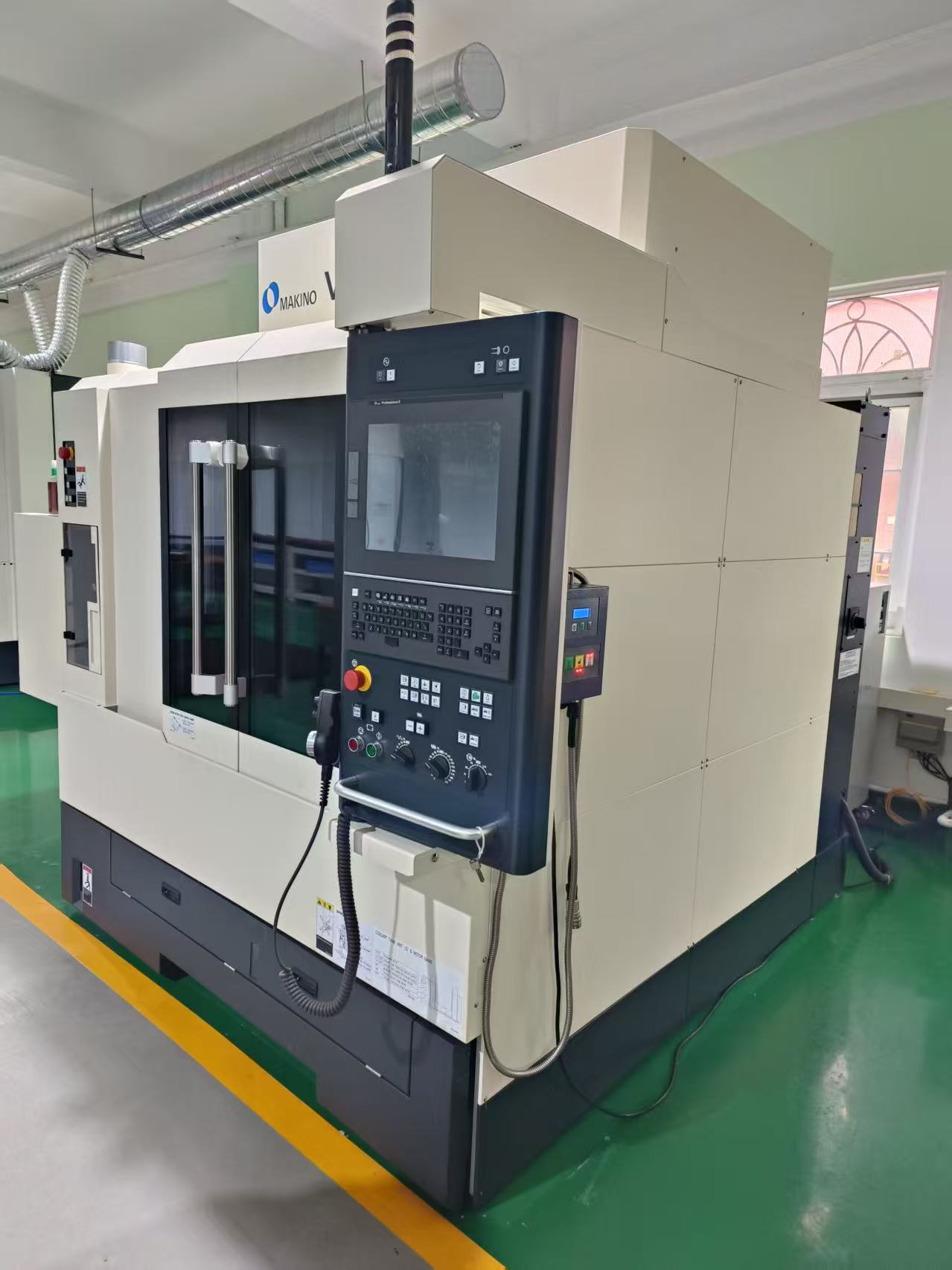
Medical CNC machining requires more than simply producing a part that matches a 3D model. Medical components may contain small holes, sealing surfaces, thin walls, threads, precision fits, or complex features that directly affect assembly and function.
For this reason, precision must be controlled throughout the whole process.
Material selection, drawing tolerances, machine stability, tooling, clamping, inspection, and surface finish all affect the final result.
At Fentor Mold, we review critical dimensions and manufacturing risks before machining begins. This helps reduce rework and keeps part quality more stable.
What Is Medical CNC Machining?
Medical CNC machining uses computer-controlled machines to manufacture precise metal or plastic components for medical equipment and related products.
Typical parts may include:
- Equipment housings
- Sensor components
- Valve bodies
- Connectors
- Mounting brackets
- Precision inserts
- Mechanical adapters
- Test equipment parts
- Small structural components
Depending on the design, CNC machining can produce complex shapes with tight dimensional control.
However, not every dimension needs the same tolerance.
That is one of the most important points in medical part manufacturing.
Why Precision Matters in Medical CNC Machining
Precision affects more than appearance.
A small dimensional error can cause problems with:
- Assembly
- Alignment
- Sealing
- Movement
- Connector position
- Screw fit
- Component clearance
For example, an outside housing dimension may allow a wider tolerance. However, a hole that locates a sensor or shaft may need much tighter control.
Therefore, critical dimensions should be identified before machining starts.
Applying very tight tolerances to every feature does not always improve quality.
Instead, it can increase machining time, inspection work, and cost.
Our guide to CNC machining tolerances for mold components explains the same principle: tolerance should match the real function of the feature.
Medical CNC Machining Starts With a Clear Drawing
A good 2D drawing is one of the most important inputs for medical CNC machining.
The drawing should clearly define:
- Critical dimensions
- General tolerances
- Datum surfaces
- Hole positions
- Flatness
- Parallelism
- Perpendicularity
- Concentricity
- Surface finish
- Thread requirements
If these requirements are unclear, the machine shop may not know which features are most important.
For example, a customer may specify ±0.01 mm on several dimensions. However, only one or two of those dimensions may actually control assembly.
Therefore, the supplier should review the drawing before production.
A short technical review can prevent unnecessary cost later.
How to Improve Medical CNC Machining Accuracy
Improving accuracy requires control of the complete machining process.
It is not enough to buy a high-end CNC machine.
Several factors work together.
Use a Stable CNC Machine
Machine rigidity is the starting point.
Vibration, spindle movement, or thermal change can affect final dimensions.
Therefore, stable machines are especially important for:
- Small precision holes
- Flat sealing surfaces
- Deep pockets
- Thin walls
- Tight positional tolerances
For long machining cycles, temperature stability also matters.
Workpiece Clamping Affects Medical CNC Machining Quality
Clamping looks simple, but it can cause major errors.
If the workpiece moves during cutting, dimensions will change.
However, excessive clamping force can also deform thin parts.
This is especially important for:
- Thin aluminum housings
- Plastic parts
- Thin stainless steel parts
- Large flat components
Therefore, fixtures should support the workpiece without creating unnecessary stress.
In some cases, the part may need several machining operations with different fixtures.
Each setup should use reliable datums.
Cutting Tools Must Match the Material
Different materials need different machining strategies.
Tool geometry, cutting speed, feed rate, and cooling all affect part quality.
A worn tool may cause:
- Poor dimensions
- Rough surfaces
- Burrs
- Excessive heat
- Poor hole quality
Therefore, tool condition should be monitored during production.
For high-precision work, replacing a tool before it completely fails can improve batch consistency.
Our article on how to improve CNC machining accuracy covers machine stability, clamping, tooling, and process control in more detail.
Common Materials for Medical CNC Machining
Material selection depends on the application.
Common materials may include:
| Material | Typical Advantage |
|---|---|
| Aluminum 6061 | Lightweight and easy to machine |
| Aluminum 7075 | Higher strength |
| Stainless Steel 304 | Good corrosion resistance |
| Stainless Steel 316 / 316L | Strong corrosion resistance |
| 17-4PH Stainless Steel | High strength |
| Titanium | High strength-to-weight ratio |
| PEEK | Heat and chemical resistance |
| POM | Good dimensional stability and wear |
| PC | Toughness and transparency |
| PMMA | Optical clarity |
However, these materials behave very differently during machining.
For example, aluminum usually machines faster than stainless steel.
Meanwhile, some engineering plastics can deform because of heat or clamping force.
Therefore, machining parameters should match the exact material.
Stainless Steel in Medical CNC Machining
Stainless steel is widely used where strength and corrosion resistance are important.
However, stainless steel can be more difficult to machine than aluminum.
Potential problems include:
- Tool wear
- Heat buildup
- Burr formation
- Poor surface finish
- Size variation
Therefore, the machining process needs proper cutting tools and stable parameters.
Sharp tools are especially important.
In addition, burr control should be planned from the beginning.
Small burrs around holes or edges can affect assembly and product cleanliness.
Aluminum for Medical CNC Machining
Aluminum is useful when low weight and good machinability are important.
It can also support complex geometry and relatively fast production.
However, aluminum parts can still present problems.
Thin walls may deform during clamping.
Large flat areas may move after material removal.
Sharp cosmetic surfaces can also be scratched during handling.
Therefore, fixture design and machining sequence are important.
For precision aluminum components, rough machining and finish machining may need separate steps.
Engineering Plastics Need Different Machining Control
CNC-machined plastic parts behave differently from metals.
Materials such as PEEK, POM, PC, and PMMA have lower stiffness than steel or aluminum.
As a result, cutting heat and clamping pressure can affect dimensions.
Common risks include:
- Part deformation
- Melting at the cutting edge
- Burrs
- Cracking
- Poor surface finish
Therefore, cutting conditions should remain controlled.
In addition, thin plastic walls need gentle clamping.
The final inspection should ideally happen after the part has returned to a stable temperature.
Tight Tolerances Should Be Used Only Where Needed
One common mistake in medical CNC machining is applying extremely tight tolerances to every dimension.
This usually increases cost.
For example, a cosmetic outer profile may not need the same tolerance as:
- A bearing hole
- A locating pin
- A sealing surface
- A sensor position
- A mating thread
Therefore, drawings should separate critical dimensions from general dimensions.
This allows the machining supplier to focus resources where they matter most.
It can also reduce machining and inspection time.
How Surface Finish Affects Medical CNC Machining
Surface finish can affect both appearance and function.
A rough surface may create problems with:
- Sealing
- Sliding
- Cleaning
- Assembly
- Cosmetic appearance
However, not every surface needs a very fine finish.
For example, an internal non-contact surface may allow a standard machining finish.
Meanwhile, a sealing or sliding surface may require much tighter control.
Therefore, surface requirements should be clearly marked on the drawing.
This prevents unnecessary polishing or secondary processing.
Burr Control Is Important for Medical CNC Parts
Burrs are small pieces of material left around machined edges.
They often appear around:
- Drilled holes
- Cross holes
- Slots
- Threads
- Sharp edges
Even small burrs can cause assembly problems.
Therefore, deburring should be part of the manufacturing plan.
However, aggressive deburring can also change dimensions.
This is especially risky around small holes and thin edges.
As a result, the deburring method should match the part geometry.
Inspection Is Critical in Medical CNC Machining
Inspection confirms whether the machined part meets the drawing.
Depending on the part, inspection may use:
- Calipers
- Micrometers
- Height gauges
- Pin gauges
- Thread gauges
- CMM
- Optical measuring equipment
However, measuring every dimension in the same way is not efficient.
Critical features should receive more attention.
For example, inspection may focus on:
- Hole position
- Hole diameter
- Flatness
- Critical thickness
- Thread fit
- Datum relationship
This provides better control over functional dimensions.
First Article Inspection Helps Reduce Risk
Before full production, a first article check can confirm the machining process.
This is especially useful when the part has:
- Tight tolerances
- Complex geometry
- Several setups
- Special materials
- Important assembly requirements
The first parts can be compared with the drawing before the remaining quantity is produced.
If a problem appears, engineers can adjust the process early.
Therefore, first article inspection can reduce the risk of producing an entire batch incorrectly.
Medical CNC Machining Needs Stable Batch Quality
One good sample does not guarantee stable production.
The machining process should also maintain quality across the full batch.
Several factors can create variation:
- Tool wear
- Machine temperature
- Fixture movement
- Material variation
- Operator setup
- Measuring methods
Therefore, critical dimensions should be monitored during production.
This becomes more important as quantity increases.
For precision component projects, our components manufacturing service combines machining with inspection and other manufacturing processes according to project requirements.
Quality Documents Should Match the Project
Different medical projects may require different documentation.
Depending on customer requirements, the supplier may need to provide:
- Dimensional inspection reports
- Material certificates
- First article reports
- Surface treatment records
- Batch identification
- Inspection records
However, documentation requirements should be confirmed before quotation.
A project with extensive inspection and traceability needs more work than a simple prototype order.
Therefore, buyers should clearly define documentation needs at the start.
Prototype and Production Parts Need Different Planning
A prototype medical part may only need a few pieces.
In this case, speed and design verification may be the main goals.
Production parts are different.
They need more focus on:
- Repeatability
- Inspection frequency
- Fixture stability
- Tool life
- Batch consistency
- Cost per part
Therefore, the manufacturing plan may change as the project moves from prototype to production.
The same CAD model does not always mean the same production method.
Common Medical CNC Machining Problems
| Problem | Possible Cause |
|---|---|
| Dimension out of tolerance | Tool wear or unstable clamping |
| Hole position error | Setup or datum problem |
| Poor surface finish | Worn tool or wrong cutting parameters |
| Burrs | Tool condition or cutting strategy |
| Thin-wall deformation | Excessive clamping force |
| Flatness problem | Material stress or machining sequence |
| Thread mismatch | Tool wear or incorrect setup |
| Batch variation | Poor process control |
Therefore, solving the problem starts with identifying the real cause.
Simply slowing the machine or tightening every tolerance may not solve it.
How to Improve Medical CNC Machining Quality
A reliable process should focus on several areas:
- Confirm the final material grade.
- Identify critical dimensions.
- Define realistic tolerances.
- Use stable fixtures and datums.
- Select the correct cutting tools.
- Control tool wear.
- Plan the machining sequence.
- Inspect critical features.
- Confirm surface and burr requirements.
- Review the first parts before full production.
These steps improve both accuracy and production stability.
More importantly, they help prevent unnecessary machining cost.
What Should Buyers Send Before Quotation?
For a medical CNC machining project, buyers should ideally provide:
- 3D CAD files
- 2D drawings
- Material grade
- Required quantity
- Critical dimensions
- Surface finish
- Surface treatment
- Inspection requirements
- Special documentation requirements
- Assembly information
Clear information improves quotation accuracy.
It also helps the supplier identify manufacturing risks before production begins.
At Fentor Mold, we prefer to review both the 3D model and 2D drawing before machining precision components.
Final Thoughts on Medical CNC Machining
Good medical CNC machining depends on much more than CNC machine accuracy.
The final result comes from the complete process.
Material choice, drawing tolerances, clamping, tooling, machining sequence, surface finish, deburring, and inspection all affect part quality.
Therefore, the goal should not be to make every dimension as tight as possible.
Instead, manufacturers should identify the dimensions that control function and focus precision where it matters most.
This approach can improve part quality, reduce rework, and create more stable production from the first sample to the final batch.