
We recently worked on a rigid PVC housing project where the customer needed a production mold for long-term use. The part looked relatively simple, but its long flow path, ribs, bosses, and end-of-fill area created several risks.
The project became a good example of why mold development should be treated as an engineering process rather than simply a machining job.
The development path was:
Requirement review → DFM → mold design → steel manufacturing → T1 → problem analysis → mold modification → T2 → validation → production
The most important lesson came during T1, when the first sample showed a short shot in an area that looked acceptable on the original 3D model.
Why PVC Was Selected for This Injection Molding Project
PVC injection molding was selected because the application required chemical resistance, electrical insulation, moisture resistance, and a reasonable material cost.
PVC is available in rigid and flexible grades. Flexible PVC normally contains plasticizers that improve flexibility, while rigid PVC is commonly considered for housings, fittings, electrical components, and other parts where stiffness is more important.
PVC also has relatively low moisture absorption and good resistance to many chemicals. However, its heat stability needs careful consideration. Excessive processing temperature can cause PVC to degrade, so the material supplier’s recommended processing window must be followed.
For our project, the customer had already selected the PVC grade and color. Therefore, our engineering task was not to replace the material but to make sure the mold and process were compatible with it.
Before steel cutting, we reviewed the 3D model, annual production volume, critical dimensions, cosmetic requirements, and expected mold life.
This early review was important because the customer’s priority was not simply obtaining a good sample. They needed a mold that could support stable production.
What We Found During the PVC Mold DFM Review
PVC injection molding projects can look straightforward until the material flow and mold structure are reviewed together.
During the DFM review, we identified three areas that needed attention.
First, the material had a relatively long flow path from the proposed gate position.
Second, several ribs and bosses were positioned toward the end of the filling direction.
Third, the final filling area had limited venting space.
None of these problems alone guaranteed a defect. However, together they increased the possibility of incomplete filling.
Our normal approach is to identify this type of risk before steel is cut. Fentormold’s Injection Mold Design & Manufacturing process includes DFM and mold-flow review so that filling, gate, cooling, and mold-structure risks can be discussed before tooling investment becomes difficult to change.
We discussed the proposed gate and venting strategy with the customer and proceeded with the mold after confirming the design direction.
At this stage, everything looked reasonable.
The real test came during T1.
PVC Injection Molding Design Considerations Before Tooling
Good PVC injection molding starts with the part design. The mold can improve the manufacturing process, but it cannot completely correct a fundamentally difficult geometry.
Wall Thickness Should Be as Uniform as Practical
Uneven wall thickness can create different cooling rates and different shrinkage behavior.
For PVC parts, maintaining reasonably uniform wall thickness is therefore important. When a thicker section is necessary, a gradual transition is normally better than an abrupt change.
A commonly referenced design range for injection-molded PVC is approximately 1.27–6 mm, although the correct wall thickness depends heavily on the PVC grade, part size, flow length, structural requirements, and application.
For our project, the important issue was not simply the nominal wall thickness. We also checked the relationship between the main wall, ribs, and bosses.
That helped reduce unnecessary flow resistance and local cooling differences.
Draft Angle and Corner Radii Affect Mold Release
Draft is another important consideration.
For PVC, a starting point of approximately 0.5°–1.5° can be considered depending on the surface finish, feature depth, resin, and mold construction. Textured surfaces may require more draft.
Sharp corners should also be avoided where possible. Rounded transitions reduce stress concentration and can improve material flow.
For production tooling, these details also influence ejection force and mold wear.
Shrinkage Must Be Included Before Steel Cutting
PVC shrinkage is generally lower than many high-shrink thermoplastics, but it still needs to be included in mold design.
A commonly referenced shrinkage range for injection-molded PVC is approximately 0.2%–0.5%, depending on the grade and processing conditions.
This does not mean that every dimension should simply be increased by the same percentage.
Actual shrinkage can vary according to:
- Part thickness
- Flow direction
- Cooling conditions
- Material grade
- Mold temperature
- Packing conditions
- Gate location
For critical dimensions, the expected shrinkage behavior should therefore be discussed during DFM rather than discovered after the first trial.
What Happened During T1
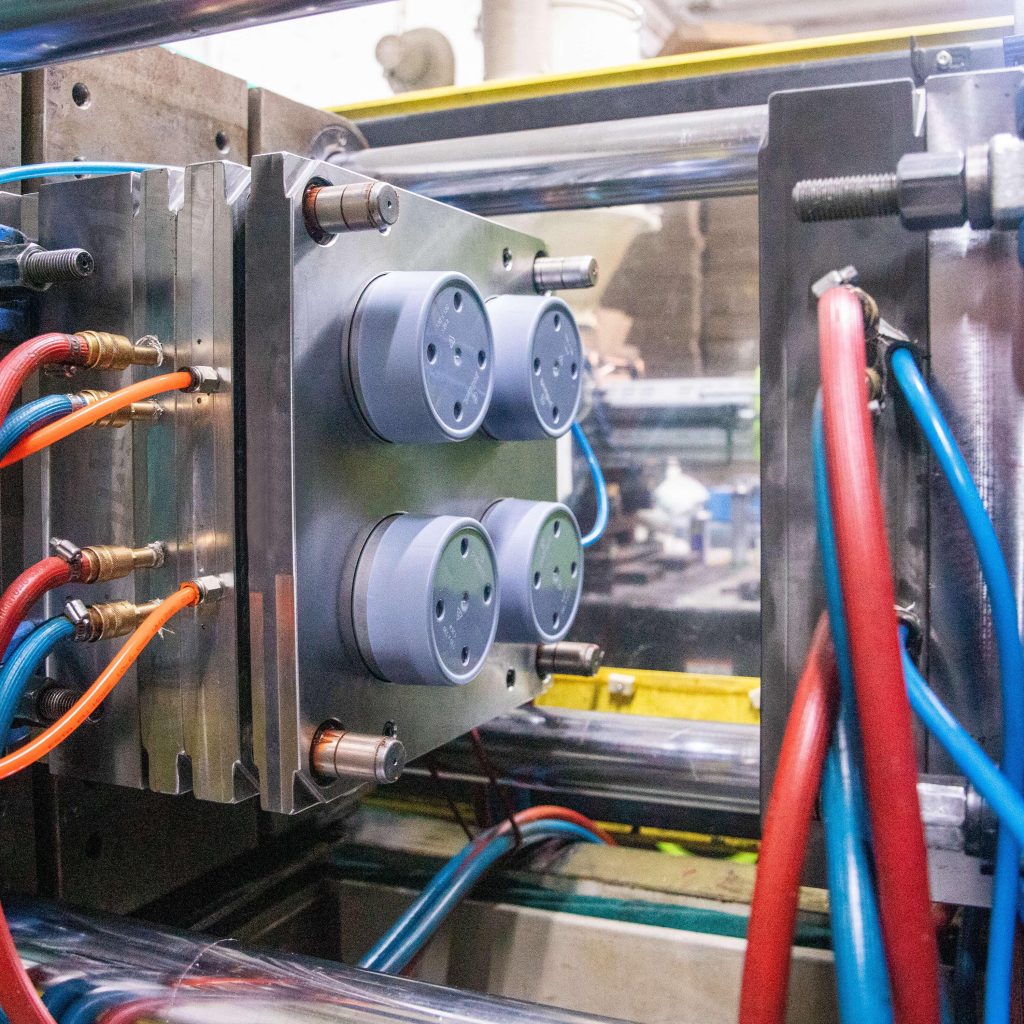
PVC injection molding reached its first real engineering test during T1.
The mold opened and closed normally. Ejection worked correctly, and most of the cavity filled as expected.
However, one section near the end of the flow path was incomplete.
The result was a short shot.
The first reaction could have been to increase injection pressure.
We did not make that the first correction.
A short shot can come from insufficient pressure, low melt temperature, poor venting, unsuitable gate design, excessive flow resistance, or material flow limitations.
Our production experience is that changing machine parameters without understanding the root cause can make the problem disappear temporarily while creating a narrower process window.
This is why we compared the T1 filling pattern with the original DFM analysis.
The location of the short shot strongly suggested that the gate and venting strategy needed another review.
The Turning Point: We Changed the Mold Instead of Simply Increasing Pressure
The biggest decision in this PVC injection molding project came after T1.
Instead of relying on higher pressure, we modified the mold to improve the filling condition.
The gate area was reviewed and adjusted.
The venting around the final filling area was improved.
Several local geometry transitions were also checked to reduce unnecessary flow resistance.
The purpose was simple:
Make the mold easier to fill instead of forcing the machine to work harder.
This distinction is important for production.
A machine can sometimes overcome a weak filling design with higher pressure or speed. However, that can increase the risk of flash, internal stress, dimensional instability, or a narrow processing window.
Our experience with injection molding short shots also shows why gate design, venting, material flow, and processing conditions need to be considered together rather than changing only one machine parameter.
After the modification, we prepared the mold for T2.
PVC Injection Molding Processing Parameters Need a Stable Window
PVC injection molding requires careful temperature control because PVC can degrade when exposed to excessive heat.
Typical reference values for some PVC grades include melt temperatures approaching 195°C and mold temperatures around 20–60°C. The exact processing window must always follow the selected resin supplier’s data sheet.
For this project, we reviewed several parameters together rather than treating temperature as the only variable.
| Processing Factor | Typical Engineering Consideration |
|---|---|
| PVC melt temperature | Can approach 195°C for some grades |
| Mold temperature | Commonly around 20–60°C |
| PVC shrinkage | Approximately 0.2%–0.5% as a general reference |
| Injection speed | Adjust according to wall thickness and flow length |
| Injection pressure | Must provide complete filling without excessive flash risk |
| Venting | Critical near the final filling area |
| Cooling | Should be as uniform as practical |
These values are engineering reference ranges, not fixed production settings. PVC grades can have different processing requirements.
The objective is to establish a stable operating window rather than find one machine setting that produces a good sample.
What Changed During T2
T2 gave us a different result.
The previously incomplete area filled completely.
More importantly, we did not stop at visual inspection.
We checked:
- Critical dimensions
- Boss positions
- Assembly interfaces
- Parting-line condition
- Surface appearance
- Ejection behavior
- Mold movement
- Repeatability
This is where T1 and T2 have different meanings.
T1 answers: Can the mold make the part?
T2 should answer: Can the mold make the part consistently?
For a procurement team, the second question is much more important.
A beautiful T1 sample does not guarantee stable production.
Why Mold Component Accuracy Matters in PVC Production
PVC injection molding depends on more than the cavity shape.
Core and cavity inserts define the final geometry. Guide pins and bushings control alignment. Slides and lifters must move consistently. Ejector components need to release the part without damaging the surface.
Fentormold’s Components Manufacturing capability includes precision machining and CMM inspection. Your required tolerance should be connected to the function of each component rather than making every mold component unnecessarily precise.
For example, a precision mold component may require around ±0.01 mm, while a non-critical component may not need the same tolerance.
This creates an important cost principle:
The right tolerance is more valuable than the tightest possible tolerance.
Over-specifying tolerances increases machining time, inspection requirements, and tooling cost without necessarily improving the plastic part.
From T2 to Production: What the Customer Really Needed
PVC injection molding was not considered successful simply because T2 produced a good sample.
The customer needed a mold capable of supporting production.
We therefore reviewed the production conditions again:
| Factor | Production Consideration |
| Material | Confirm exact PVC grade and color |
| Filling | Stable cavity filling without short shots |
| Venting | Adequate air evacuation at end-of-fill areas |
| Wall thickness | Keep as uniform as practical |
| Shrinkage | Account for material and geometry |
| Cooling | Maintain consistent part temperature |
| Ejection | Avoid deformation and surface damage |
| Inspection | Monitor critical dimensions |
| Tooling | Check wear and repeatability |
| Process | Maintain a practical operating window |
This type of review helps prevent a common sourcing problem: a mold looks successful during sampling but becomes expensive during mass production because operators need constant parameter changes or because the mold requires repeated modifications.
When Does PVC Injection Molding Make Commercial Sense?
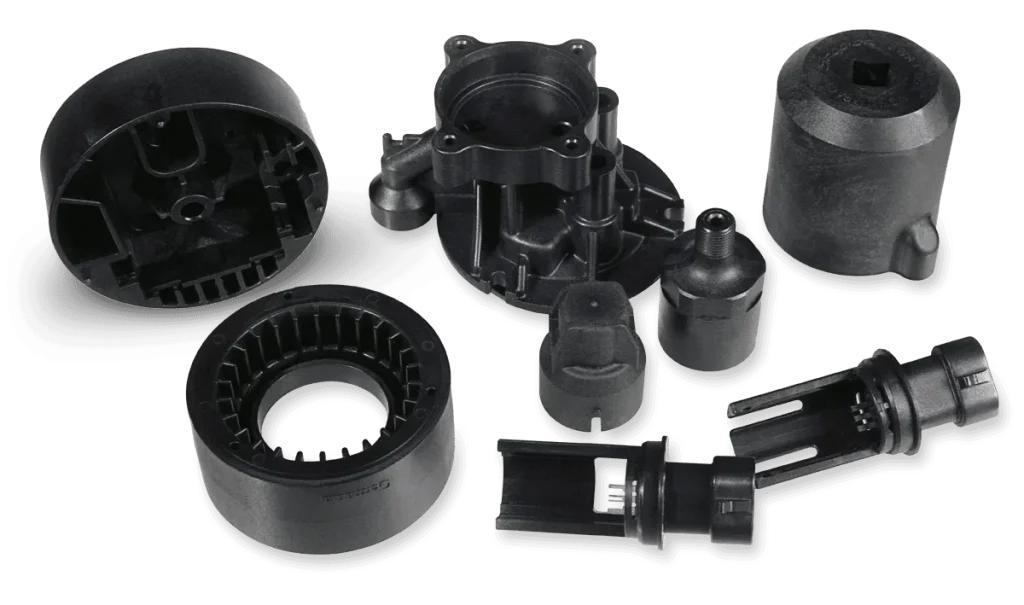
PVC injection molding makes sense when the part requires a combination of PVC’s material properties and the repeatability of injection molding.
Typical applications can include:
- Electrical housings
- Pipe fittings
- Valves
- Handles
- Enclosures
- Medical components
- Industrial fittings
- Consumer products
Production volume is also important.
For high-volume projects, production tooling can spread the mold investment across a large number of parts.
For low-volume or early-stage products, prototype tooling may be commercially safer.
Fentormold’s Prototype Injection Molding service uses aluminum or soft-steel molds for functional parts and low-volume production. This approach can allow an engineering team to validate fit, assembly, material behavior, and product design before committing to full production tooling.
The Cost Lesson: Tool Price Is Not the Same as Project Cost
The most important commercial lesson from this PVC project was that the cheapest mold quotation is not necessarily the lowest-cost manufacturing solution.
A low initial mold price can become expensive when the project requires:
- Multiple mold modifications
- Additional T1/T2 trials
- High scrap rates
- Unstable dimensions
- Long cycle times
- Excessive machine pressure
- Repeated engineering changes
- Production delays
For this project, the additional engineering work during DFM and T1 helped prevent the short-shot issue from becoming a mass-production problem.
The saving did not come from removing mold features or selecting cheaper tooling materials.
It came from solving the right problem before production volume increased.
What This PVC Project Taught Us About Production Tooling
The final lesson from this PVC injection molding project was simple:
A production mold should be designed around the final manufacturing condition, not just the first successful sample.
The project moved through a clear engineering sequence:
Customer requirements → DFM → mold design → steel manufacturing → T1 → short-shot analysis → mold modification → T2 → dimensional validation → production
Each stage had a different purpose.
DFM identified the potential risk.
T1 exposed the actual filling problem.
Engineering analysis identified the likely root cause.
The mold modification improved filling.
T2 confirmed the correction.
Production validation then moved the project closer to stable mass production.
For engineers and procurement teams evaluating a PVC project, the most useful information to provide a mold supplier is the 3D model, exact PVC grade, annual volume, critical dimensions, surface requirements, expected tool life, and target delivery date.
The earlier these factors are reviewed together, the easier it becomes to select the correct gate, cooling, venting, mold structure, and processing strategy.
Need Help With Your PVC Injection Molding Project?
Choosing PVC is only the beginning. The mold design, gate location, venting, cooling, shrinkage allowance, and processing window all affect the final part quality and production cost.
If you are developing a new PVC component or looking for a reliable injection molding supplier, Fentormold can review your project before tooling starts. Our engineering team can evaluate your 3D drawings, PVC grade, annual volume, critical tolerances, surface requirements, and production targets, then recommend a practical tooling and manufacturing approach.
Whether you need a prototype mold, production injection mold, or ongoing injection molding production, we can support the project from DFM and mold design through T1/T2 trials, mold optimization, inspection, and mass production.
Send us your 3D file, PVC material grade, estimated quantity, and key requirements. We can review the project and provide engineering feedback and a quotation based on your actual production needs—not simply the lowest initial tooling price.
If your goal is a PVC mold that runs reliably in production, let Fentormold’s engineers review the project before you commit to tooling.
PVC injection molding can be a practical choice for housings, fittings, electrical components, medical products, and other industrial plastic parts. But choosing PVC is only the first decision. The real challenge is making the material fill the mold consistently, controlling shrinkage and appearance, and keeping the process stable when the mold moves from T1 to mass production.
We recently worked on a rigid PVC housing project where the customer needed a production mold for long-term use. The part looked relatively simple, but its long flow path, ribs, bosses, and end-of-fill area created several risks.
The project became a good example of why mold development should be treated as an engineering process rather than simply a machining job.
The development path was:
Requirement review → DFM → mold design → steel manufacturing → T1 → problem analysis → mold modification → T2 → validation → production
The most important lesson came during T1, when the first sample showed a short shot in an area that looked acceptable on the original 3D model.
Why PVC Was Selected for This Injection Molding Project
PVC injection molding was selected because the application required chemical resistance, electrical insulation, moisture resistance, and a reasonable material cost.
PVC is available in rigid and flexible grades. Flexible PVC normally contains plasticizers that improve flexibility, while rigid PVC is commonly considered for housings, fittings, electrical components, and other parts where stiffness is more important.
PVC also has relatively low moisture absorption and good resistance to many chemicals. However, its heat stability needs careful consideration. Excessive processing temperature can cause PVC to degrade, so the material supplier’s recommended processing window must be followed.
For our project, the customer had already selected the PVC grade and color. Therefore, our engineering task was not to replace the material but to make sure the mold and process were compatible with it.
Before steel cutting, we reviewed the 3D model, annual production volume, critical dimensions, cosmetic requirements, and expected mold life.
This early review was important because the customer’s priority was not simply obtaining a good sample. They needed a mold that could support stable production.
What We Found During the PVC Mold DFM Review
PVC injection molding projects can look straightforward until the material flow and mold structure are reviewed together.
During the DFM review, we identified three areas that needed attention.
First, the material had a relatively long flow path from the proposed gate position.
Second, several ribs and bosses were positioned toward the end of the filling direction.
Third, the final filling area had limited venting space.
None of these problems alone guaranteed a defect. However, together they increased the possibility of incomplete filling.
Our normal approach is to identify this type of risk before steel is cut. Fentormold’s Injection Mold Design & Manufacturing process includes DFM and mold-flow review so that filling, gate, cooling, and mold-structure risks can be discussed before tooling investment becomes difficult to change.
We discussed the proposed gate and venting strategy with the customer and proceeded with the mold after confirming the design direction.
At this stage, everything looked reasonable.
The real test came during T1.
PVC Injection Molding Design Considerations Before Tooling
Good PVC injection molding starts with the part design. The mold can improve the manufacturing process, but it cannot completely correct a fundamentally difficult geometry.
Wall Thickness Should Be as Uniform as Practical
Uneven wall thickness can create different cooling rates and different shrinkage behavior.
For PVC parts, maintaining reasonably uniform wall thickness is therefore important. When a thicker section is necessary, a gradual transition is normally better than an abrupt change.
A commonly referenced design range for injection-molded PVC is approximately 1.27–6 mm, although the correct wall thickness depends heavily on the PVC grade, part size, flow length, structural requirements, and application.
For our project, the important issue was not simply the nominal wall thickness. We also checked the relationship between the main wall, ribs, and bosses.
That helped reduce unnecessary flow resistance and local cooling differences.
Draft Angle and Corner Radii Affect Mold Release
Draft is another important consideration.
For PVC, a starting point of approximately 0.5°–1.5° can be considered depending on the surface finish, feature depth, resin, and mold construction. Textured surfaces may require more draft.
Sharp corners should also be avoided where possible. Rounded transitions reduce stress concentration and can improve material flow.
For production tooling, these details also influence ejection force and mold wear.
Shrinkage Must Be Included Before Steel Cutting
PVC shrinkage is generally lower than many high-shrink thermoplastics, but it still needs to be included in mold design.
A commonly referenced shrinkage range for injection-molded PVC is approximately 0.2%–0.5%, depending on the grade and processing conditions.
This does not mean that every dimension should simply be increased by the same percentage.
Actual shrinkage can vary according to:
- Part thickness
- Flow direction
- Cooling conditions
- Material grade
- Mold temperature
- Packing conditions
- Gate location
For critical dimensions, the expected shrinkage behavior should therefore be discussed during DFM rather than discovered after the first trial.
What Happened During T1
PVC injection molding reached its first real engineering test during T1.
The mold opened and closed normally. Ejection worked correctly, and most of the cavity filled as expected.
However, one section near the end of the flow path was incomplete.
The result was a short shot.
The first reaction could have been to increase injection pressure.
We did not make that the first correction.
A short shot can come from insufficient pressure, low melt temperature, poor venting, unsuitable gate design, excessive flow resistance, or material flow limitations.
Our production experience is that changing machine parameters without understanding the root cause can make the problem disappear temporarily while creating a narrower process window.
This is why we compared the T1 filling pattern with the original DFM analysis.
The location of the short shot strongly suggested that the gate and venting strategy needed another review.
The Turning Point: We Changed the Mold Instead of Simply Increasing Pressure
The biggest decision in this PVC injection molding project came after T1.
Instead of relying on higher pressure, we modified the mold to improve the filling condition.
The gate area was reviewed and adjusted.
The venting around the final filling area was improved.
Several local geometry transitions were also checked to reduce unnecessary flow resistance.
The purpose was simple:
Make the mold easier to fill instead of forcing the machine to work harder.
This distinction is important for production.
A machine can sometimes overcome a weak filling design with higher pressure or speed. However, that can increase the risk of flash, internal stress, dimensional instability, or a narrow processing window.
Our experience with injection molding short shots also shows why gate design, venting, material flow, and processing conditions need to be considered together rather than changing only one machine parameter.
After the modification, we prepared the mold for T2.
PVC Injection Molding Processing Parameters Need a Stable Window
PVC injection molding requires careful temperature control because PVC can degrade when exposed to excessive heat.
Typical reference values for some PVC grades include melt temperatures approaching 195°C and mold temperatures around 20–60°C. The exact processing window must always follow the selected resin supplier’s data sheet.
For this project, we reviewed several parameters together rather than treating temperature as the only variable.
| Processing Factor | Typical Engineering Consideration |
|---|---|
| PVC melt temperature | Can approach 195°C for some grades |
| Mold temperature | Commonly around 20–60°C |
| PVC shrinkage | Approximately 0.2%–0.5% as a general reference |
| Injection speed | Adjust according to wall thickness and flow length |
| Injection pressure | Must provide complete filling without excessive flash risk |
| Venting | Critical near the final filling area |
| Cooling | Should be as uniform as practical |
These values are engineering reference ranges, not fixed production settings. PVC grades can have different processing requirements.
The objective is to establish a stable operating window rather than find one machine setting that produces a good sample.
What Changed During T2
T2 gave us a different result.
The previously incomplete area filled completely.
More importantly, we did not stop at visual inspection.
We checked:
- Critical dimensions
- Boss positions
- Assembly interfaces
- Parting-line condition
- Surface appearance
- Ejection behavior
- Mold movement
- Repeatability
This is where T1 and T2 have different meanings.
T1 answers: Can the mold make the part?
T2 should answer: Can the mold make the part consistently?
For a procurement team, the second question is much more important.
A beautiful T1 sample does not guarantee stable production.
Why Mold Component Accuracy Matters in PVC Production
PVC injection molding depends on more than the cavity shape.
Core and cavity inserts define the final geometry. Guide pins and bushings control alignment. Slides and lifters must move consistently. Ejector components need to release the part without damaging the surface.
Fentormold’s Components Manufacturing capability includes precision machining and CMM inspection. Your required tolerance should be connected to the function of each component rather than making every mold component unnecessarily precise.
For example, a precision mold component may require around ±0.01 mm, while a non-critical component may not need the same tolerance.
This creates an important cost principle:
The right tolerance is more valuable than the tightest possible tolerance.
Over-specifying tolerances increases machining time, inspection requirements, and tooling cost without necessarily improving the plastic part.
From T2 to Production: What the Customer Really Needed
PVC injection molding was not considered successful simply because T2 produced a good sample.
The customer needed a mold capable of supporting production.
We therefore reviewed the production conditions again:
| Factor | Production Consideration |
| Material | Confirm exact PVC grade and color |
| Filling | Stable cavity filling without short shots |
| Venting | Adequate air evacuation at end-of-fill areas |
| Wall thickness | Keep as uniform as practical |
| Shrinkage | Account for material and geometry |
| Cooling | Maintain consistent part temperature |
| Ejection | Avoid deformation and surface damage |
| Inspection | Monitor critical dimensions |
| Tooling | Check wear and repeatability |
| Process | Maintain a practical operating window |
This type of review helps prevent a common sourcing problem: a mold looks successful during sampling but becomes expensive during mass production because operators need constant parameter changes or because the mold requires repeated modifications.
When Does PVC Injection Molding Make Commercial Sense?
PVC injection molding makes sense when the part requires a combination of PVC’s material properties and the repeatability of injection molding.
Typical applications can include:
- Electrical housings
- Pipe fittings
- Valves
- Handles
- Enclosures
- Medical components
- Industrial fittings
- Consumer products
Production volume is also important.
For high-volume projects, production tooling can spread the mold investment across a large number of parts.
For low-volume or early-stage products, prototype tooling may be commercially safer.
Fentormold’s Prototype Injection Molding service uses aluminum or soft-steel molds for functional parts and low-volume production. This approach can allow an engineering team to validate fit, assembly, material behavior, and product design before committing to full production tooling.
The Cost Lesson: Tool Price Is Not the Same as Project Cost
The most important commercial lesson from this PVC project was that the cheapest mold quotation is not necessarily the lowest-cost manufacturing solution.
A low initial mold price can become expensive when the project requires:
- Multiple mold modifications
- Additional T1/T2 trials
- High scrap rates
- Unstable dimensions
- Long cycle times
- Excessive machine pressure
- Repeated engineering changes
- Production delays
For this project, the additional engineering work during DFM and T1 helped prevent the short-shot issue from becoming a mass-production problem.
The saving did not come from removing mold features or selecting cheaper tooling materials.
It came from solving the right problem before production volume increased.
What This PVC Project Taught Us About Production Tooling
The final lesson from this PVC injection molding project was simple:
A production mold should be designed around the final manufacturing condition, not just the first successful sample.
The project moved through a clear engineering sequence:
Customer requirements → DFM → mold design → steel manufacturing → T1 → short-shot analysis → mold modification → T2 → dimensional validation → production
Each stage had a different purpose.
DFM identified the potential risk.
T1 exposed the actual filling problem.
Engineering analysis identified the likely root cause.
The mold modification improved filling.
T2 confirmed the correction.
Production validation then moved the project closer to stable mass production.
For engineers and procurement teams evaluating a PVC project, the most useful information to provide a mold supplier is the 3D model, exact PVC grade, annual volume, critical dimensions, surface requirements, expected tool life, and target delivery date.
The earlier these factors are reviewed together, the easier it becomes to select the correct gate, cooling, venting, mold structure, and processing strategy.
Need Help With Your PVC Injection Molding Project?
Choosing PVC is only the beginning. The mold design, gate location, venting, cooling, shrinkage allowance, and processing window all affect the final part quality and production cost.
If you are developing a new PVC component or looking for a reliable injection molding supplier, Fentormold can review your project before tooling starts. Our engineering team can evaluate your 3D drawings, PVC grade, annual volume, critical tolerances, surface requirements, and production targets, then recommend a practical tooling and manufacturing approach.
Whether you need a prototype mold, production injection mold, or ongoing injection molding production, we can support the project from DFM and mold design through T1/T2 trials, mold optimization, inspection, and mass production.
Send us your 3D file, PVC material grade, estimated quantity, and key requirements. We can review the project and provide engineering feedback and a quotation based on your actual production needs—not simply the lowest initial tooling price.
If your goal is a PVC mold that runs reliably in production, let Fentormold’s engineers review the project before you commit to tooling.PVC injection molding can be a practical choice for housings, fittings, electrical components, medical products, and other industrial plastic parts. But choosing PVC is only the first decision. The real challenge is making the material fill the mold consistently, controlling shrinkage and appearance, and keeping the process stable when the mold moves from T1 to mass production.
We recently worked on a rigid PVC housing project where the customer needed a production mold for long-term use. The part looked relatively simple, but its long flow path, ribs, bosses, and end-of-fill area created several risks.
The project became a good example of why mold development should be treated as an engineering process rather than simply a machining job.
The development path was:
Requirement review → DFM → mold design → steel manufacturing → T1 → problem analysis → mold modification → T2 → validation → production
The most important lesson came during T1, when the first sample showed a short shot in an area that looked acceptable on the original 3D model.
Why PVC Was Selected for This Injection Molding Project
PVC injection molding was selected because the application required chemical resistance, electrical insulation, moisture resistance, and a reasonable material cost.
PVC is available in rigid and flexible grades. Flexible PVC normally contains plasticizers that improve flexibility, while rigid PVC is commonly considered for housings, fittings, electrical components, and other parts where stiffness is more important.
PVC also has relatively low moisture absorption and good resistance to many chemicals. However, its heat stability needs careful consideration. Excessive processing temperature can cause PVC to degrade, so the material supplier’s recommended processing window must be followed.
For our project, the customer had already selected the PVC grade and color. Therefore, our engineering task was not to replace the material but to make sure the mold and process were compatible with it.
Before steel cutting, we reviewed the 3D model, annual production volume, critical dimensions, cosmetic requirements, and expected mold life.
This early review was important because the customer’s priority was not simply obtaining a good sample. They needed a mold that could support stable production.
What We Found During the PVC Mold DFM Review
PVC injection molding projects can look straightforward until the material flow and mold structure are reviewed together.
During the DFM review, we identified three areas that needed attention.
First, the material had a relatively long flow path from the proposed gate position.
Second, several ribs and bosses were positioned toward the end of the filling direction.
Third, the final filling area had limited venting space.
None of these problems alone guaranteed a defect. However, together they increased the possibility of incomplete filling.
Our normal approach is to identify this type of risk before steel is cut. Fentormold’s Injection Mold Design & Manufacturing process includes DFM and mold-flow review so that filling, gate, cooling, and mold-structure risks can be discussed before tooling investment becomes difficult to change.
We discussed the proposed gate and venting strategy with the customer and proceeded with the mold after confirming the design direction.
At this stage, everything looked reasonable.
The real test came during T1.
PVC Injection Molding Design Considerations Before Tooling
Good PVC injection molding starts with the part design. The mold can improve the manufacturing process, but it cannot completely correct a fundamentally difficult geometry.
Wall Thickness Should Be as Uniform as Practical
Uneven wall thickness can create different cooling rates and different shrinkage behavior.
For PVC parts, maintaining reasonably uniform wall thickness is therefore important. When a thicker section is necessary, a gradual transition is normally better than an abrupt change.
A commonly referenced design range for injection-molded PVC is approximately 1.27–6 mm, although the correct wall thickness depends heavily on the PVC grade, part size, flow length, structural requirements, and application.
For our project, the important issue was not simply the nominal wall thickness. We also checked the relationship between the main wall, ribs, and bosses.
That helped reduce unnecessary flow resistance and local cooling differences.
Draft Angle and Corner Radii Affect Mold Release
Draft is another important consideration.
For PVC, a starting point of approximately 0.5°–1.5° can be considered depending on the surface finish, feature depth, resin, and mold construction. Textured surfaces may require more draft.
Sharp corners should also be avoided where possible. Rounded transitions reduce stress concentration and can improve material flow.
For production tooling, these details also influence ejection force and mold wear.
Shrinkage Must Be Included Before Steel Cutting
PVC shrinkage is generally lower than many high-shrink thermoplastics, but it still needs to be included in mold design.
A commonly referenced shrinkage range for injection-molded PVC is approximately 0.2%–0.5%, depending on the grade and processing conditions.
This does not mean that every dimension should simply be increased by the same percentage.
Actual shrinkage can vary according to:
- Part thickness
- Flow direction
- Cooling conditions
- Material grade
- Mold temperature
- Packing conditions
- Gate location
For critical dimensions, the expected shrinkage behavior should therefore be discussed during DFM rather than discovered after the first trial.
What Happened During T1
PVC injection molding reached its first real engineering test during T1.
The mold opened and closed normally. Ejection worked correctly, and most of the cavity filled as expected.
However, one section near the end of the flow path was incomplete.
The result was a short shot.
The first reaction could have been to increase injection pressure.
We did not make that the first correction.
A short shot can come from insufficient pressure, low melt temperature, poor venting, unsuitable gate design, excessive flow resistance, or material flow limitations.
Our production experience is that changing machine parameters without understanding the root cause can make the problem disappear temporarily while creating a narrower process window.
This is why we compared the T1 filling pattern with the original DFM analysis.
The location of the short shot strongly suggested that the gate and venting strategy needed another review.
The Turning Point: We Changed the Mold Instead of Simply Increasing Pressure
The biggest decision in this PVC injection molding project came after T1.
Instead of relying on higher pressure, we modified the mold to improve the filling condition.
The gate area was reviewed and adjusted.
The venting around the final filling area was improved.
Several local geometry transitions were also checked to reduce unnecessary flow resistance.
The purpose was simple:
Make the mold easier to fill instead of forcing the machine to work harder.
This distinction is important for production.
A machine can sometimes overcome a weak filling design with higher pressure or speed. However, that can increase the risk of flash, internal stress, dimensional instability, or a narrow processing window.
Our experience with injection molding short shots also shows why gate design, venting, material flow, and processing conditions need to be considered together rather than changing only one machine parameter.
After the modification, we prepared the mold for T2.
PVC Injection Molding Processing Parameters Need a Stable Window
PVC injection molding requires careful temperature control because PVC can degrade when exposed to excessive heat.
Typical reference values for some PVC grades include melt temperatures approaching 195°C and mold temperatures around 20–60°C. The exact processing window must always follow the selected resin supplier’s data sheet.
For this project, we reviewed several parameters together rather than treating temperature as the only variable.
| Processing Factor | Typical Engineering Consideration |
|---|---|
| PVC melt temperature | Can approach 195°C for some grades |
| Mold temperature | Commonly around 20–60°C |
| PVC shrinkage | Approximately 0.2%–0.5% as a general reference |
| Injection speed | Adjust according to wall thickness and flow length |
| Injection pressure | Must provide complete filling without excessive flash risk |
| Venting | Critical near the final filling area |
| Cooling | Should be as uniform as practical |
These values are engineering reference ranges, not fixed production settings. PVC grades can have different processing requirements.
The objective is to establish a stable operating window rather than find one machine setting that produces a good sample.
What Changed During T2
T2 gave us a different result.
The previously incomplete area filled completely.
More importantly, we did not stop at visual inspection.
We checked:
- Critical dimensions
- Boss positions
- Assembly interfaces
- Parting-line condition
- Surface appearance
- Ejection behavior
- Mold movement
- Repeatability
This is where T1 and T2 have different meanings.
T1 answers: Can the mold make the part?
T2 should answer: Can the mold make the part consistently?
For a procurement team, the second question is much more important.
A beautiful T1 sample does not guarantee stable production.
Why Mold Component Accuracy Matters in PVC Production
PVC injection molding depends on more than the cavity shape.
Core and cavity inserts define the final geometry. Guide pins and bushings control alignment. Slides and lifters must move consistently. Ejector components need to release the part without damaging the surface.
Fentormold’s Components Manufacturing capability includes precision machining and CMM inspection. Your required tolerance should be connected to the function of each component rather than making every mold component unnecessarily precise.
For example, a precision mold component may require around ±0.01 mm, while a non-critical component may not need the same tolerance.
This creates an important cost principle:
The right tolerance is more valuable than the tightest possible tolerance.
Over-specifying tolerances increases machining time, inspection requirements, and tooling cost without necessarily improving the plastic part.
From T2 to Production: What the Customer Really Needed
PVC injection molding was not considered successful simply because T2 produced a good sample.
The customer needed a mold capable of supporting production.
We therefore reviewed the production conditions again:
| Factor | Production Consideration |
| Material | Confirm exact PVC grade and color |
| Filling | Stable cavity filling without short shots |
| Venting | Adequate air evacuation at end-of-fill areas |
| Wall thickness | Keep as uniform as practical |
| Shrinkage | Account for material and geometry |
| Cooling | Maintain consistent part temperature |
| Ejection | Avoid deformation and surface damage |
| Inspection | Monitor critical dimensions |
| Tooling | Check wear and repeatability |
| Process | Maintain a practical operating window |
This type of review helps prevent a common sourcing problem: a mold looks successful during sampling but becomes expensive during mass production because operators need constant parameter changes or because the mold requires repeated modifications.
When Does PVC Injection Molding Make Commercial Sense?
PVC injection molding makes sense when the part requires a combination of PVC’s material properties and the repeatability of injection molding.
Typical applications can include:
- Electrical housings
- Pipe fittings
- Valves
- Handles
- Enclosures
- Medical components
- Industrial fittings
- Consumer products
Production volume is also important.
For high-volume projects, production tooling can spread the mold investment across a large number of parts.
For low-volume or early-stage products, prototype tooling may be commercially safer.
Fentormold’s Prototype Injection Molding service uses aluminum or soft-steel molds for functional parts and low-volume production. This approach can allow an engineering team to validate fit, assembly, material behavior, and product design before committing to full production tooling.
The Cost Lesson: Tool Price Is Not the Same as Project Cost
The most important commercial lesson from this PVC project was that the cheapest mold quotation is not necessarily the lowest-cost manufacturing solution.
A low initial mold price can become expensive when the project requires:
- Multiple mold modifications
- Additional T1/T2 trials
- High scrap rates
- Unstable dimensions
- Long cycle times
- Excessive machine pressure
- Repeated engineering changes
- Production delays
For this project, the additional engineering work during DFM and T1 helped prevent the short-shot issue from becoming a mass-production problem.
The saving did not come from removing mold features or selecting cheaper tooling materials.
It came from solving the right problem before production volume increased.
What This PVC Project Taught Us About Production Tooling
The final lesson from this PVC injection molding project was simple:
A production mold should be designed around the final manufacturing condition, not just the first successful sample.
The project moved through a clear engineering sequence:
Customer requirements → DFM → mold design → steel manufacturing → T1 → short-shot analysis → mold modification → T2 → dimensional validation → production
Each stage had a different purpose.
DFM identified the potential risk.
T1 exposed the actual filling problem.
Engineering analysis identified the likely root cause.
The mold modification improved filling.
T2 confirmed the correction.
Production validation then moved the project closer to stable mass production.
For engineers and procurement teams evaluating a PVC project, the most useful information to provide a mold supplier is the 3D model, exact PVC grade, annual volume, critical dimensions, surface requirements, expected tool life, and target delivery date.
The earlier these factors are reviewed together, the easier it becomes to select the correct gate, cooling, venting, mold structure, and processing strategy.
Need Help With Your PVC Injection Molding Project?
Choosing PVC is only the beginning. The mold design, gate location, venting, cooling, shrinkage allowance, and processing window all affect the final part quality and production cost.
If you are developing a new PVC component or looking for a reliable injection molding supplier, Fentormold can review your project before tooling starts. Our engineering team can evaluate your 3D drawings, PVC grade, annual volume, critical tolerances, surface requirements, and production targets, then recommend a practical tooling and manufacturing approach.
Whether you need a prototype mold, production injection mold, or ongoing injection molding production, we can support the project from DFM and mold design through T1/T2 trials, mold optimization, inspection, and mass production.
Send us your 3D file, PVC material grade, estimated quantity, and key requirements. We can review the project and provide engineering feedback and a quotation based on your actual production needs—not simply the lowest initial tooling price.
If your goal is a PVC mold that runs reliably in production, let Fentormold’s engineers review the project before you commit to tooling.