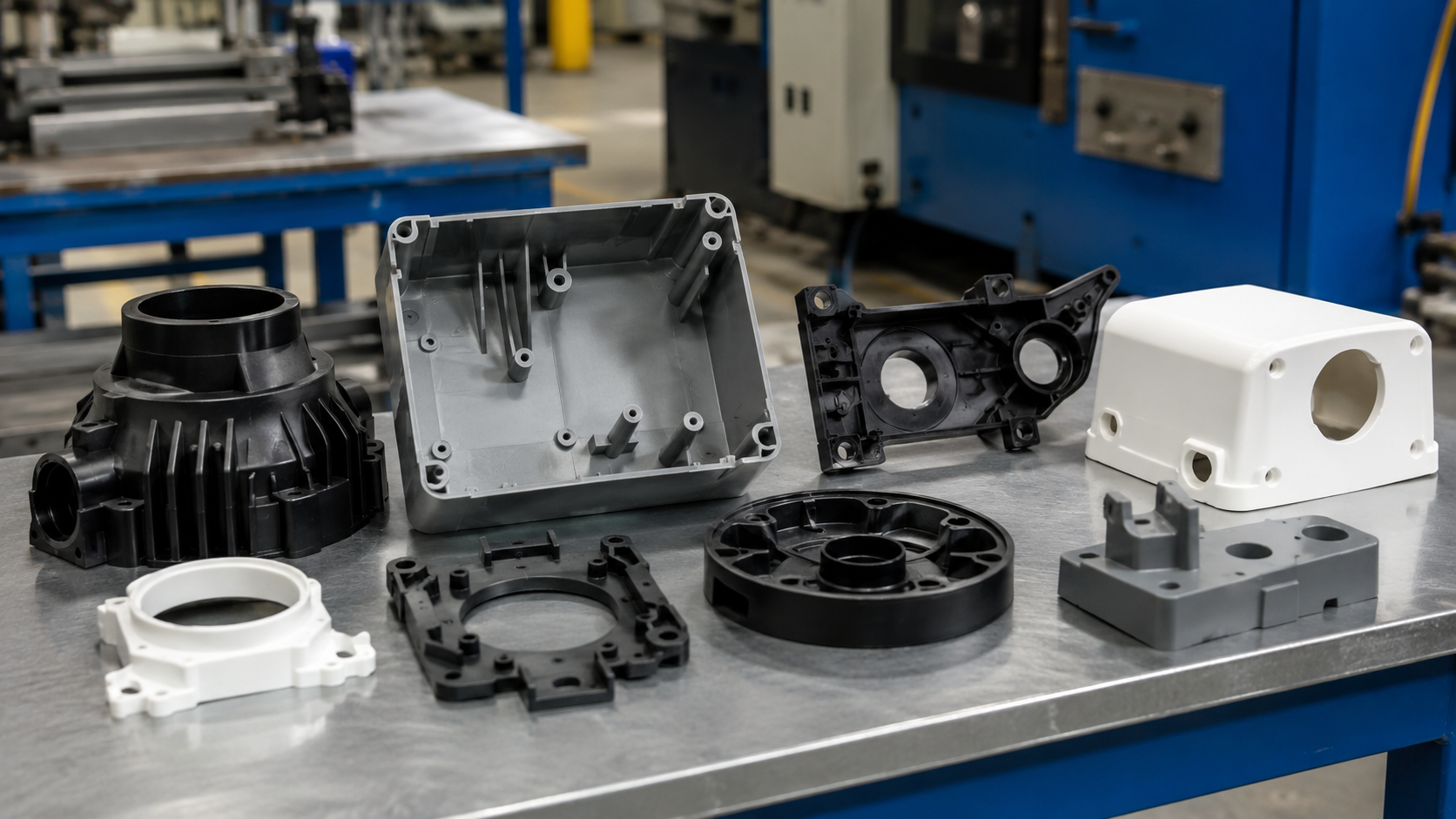
Choosing the right custom plastic parts manufacturer is not simply a matter of comparing unit prices. A supplier may offer an attractive quotation, but the real test begins when tooling starts, samples arrive, dimensions are checked, and the project moves into repeat production.
For buyers, the best supplier is usually the one that understands the complete project rather than only the plastic part. Material selection, mold design, tolerances, molding conditions, inspection requirements, production volume, packaging, and delivery all affect the final result.
A good sourcing process should therefore answer a more practical question:
Can this supplier consistently manufacture the part you need, at the quality level and volume your project requires?
This guide explains what buyers should check when evaluating a custom plastic parts manufacturer, from the first RFQ through tooling, sampling, quality control, and mass production.
What Does a Custom Plastic Parts Manufacturer Actually Do?
A custom plastic parts manufacturer produces components according to a customer’s specific design rather than selling standard off-the-shelf products.
In an injection molding project, the work may include:
- Reviewing 2D and 3D drawings
- DFM analysis
- Material selection
- Mold design
- Mold manufacturing
- Mold trials
- Injection molding
- Dimensional inspection
- Assembly or secondary operations
- Packaging
- Repeat production
Some suppliers only mold parts using customer-owned tooling. Others manufacture the mold and produce the molded parts under the same project.
Neither model is automatically better.
What matters is whether responsibilities are clearly defined and whether the supplier has the engineering and production capability required for your project.
If you need both tooling and production, working with one supplier can simplify communication because mold modifications, molding conditions, and part-quality feedback remain within the same project team.
Start With the Part, Not the Supplier’s Sales Presentation
It is easy to be impressed by a factory introduction showing rows of injection molding machines and polished inspection equipment.
That information is useful, but it does not tell you whether the supplier is suitable for your particular part.
Start with your own requirements.
Before requesting a quotation, define as much of the following as possible:
- 3D CAD model
- 2D drawing
- Plastic material and grade
- Estimated annual volume
- Required color
- Surface finish
- Critical dimensions
- Functional requirements
- Cosmetic areas
- Assembly conditions
- Testing requirements
- Packaging requirements
- Target production location
A supplier can only make a meaningful technical assessment if the RFQ contains enough information.
If several important items are still undecided, say so clearly. A capable supplier should help identify which decisions need to be made before tooling begins.
How Does a Custom Plastic Parts Manufacturer Review Your Design?
One of the easiest ways to evaluate a supplier is to look at what happens after you send the CAD file.
Do they immediately send a price?
Or do they first ask questions about the part?
A useful engineering review may identify issues such as:
- Uneven wall thickness
- Insufficient draft
- Deep ribs
- Thick bosses
- Difficult undercuts
- Sharp transitions
- Weak areas
- Potential sink marks
- Warpage risk
- Gate limitations
- Difficult ejection
- Unrealistic tolerances
Not every part requires a long DFM report before quotation. However, for a new mold project, the supplier should at least demonstrate that someone has reviewed how the part will actually be molded.
A low tooling price has little value if obvious manufacturability problems are discovered only after T1.
For projects that require new tooling, you can learn more about our custom injection mold manufacturing process, including engineering review, mold development, and trial preparation.
Check Whether the Supplier Understands Plastic Materials
A custom plastic parts manufacturer should understand more than material names such as ABS, PC, PP, PA, POM, or PC/ABS.
The actual grade can affect:
- Shrinkage
- Flow
- Mold temperature
- Melt temperature
- Warpage
- Mechanical strength
- Chemical resistance
- UV resistance
- Surface appearance
- Dimensional stability
For example, changing from an unfilled nylon to a glass-filled nylon can significantly change shrinkage behavior and dimensional characteristics.
The mold may therefore need to be designed around the final production material.
If the resin has not yet been selected, give the supplier the application requirements instead.
Useful information might include:
The part is used outdoors, must resist UV exposure, needs good impact strength, and operates from -20°C to 70°C.
This gives the supplier something useful to evaluate.
Simply asking for “a strong plastic” does not.
How to Evaluate Tooling Capability
The mold determines much of what happens later in production.
A strong molding department cannot fully compensate for a poorly designed or poorly manufactured tool.
When evaluating a supplier that will also build your mold, ask how they approach:
- Parting-line design
- Gate location
- Runner design
- Cooling
- Venting
- Ejection
- Slider and lifter mechanisms
- Steel selection
- Mold life
- Spare components
- Mold maintenance
The answers do not need to be extremely complicated.
In fact, a supplier that explains the proposed structure clearly is often easier to work with than one that sends technical drawings without explaining the reasoning behind them.
Buyers should also establish who owns the tooling and what happens if the mold needs to be transferred later.
These details are better agreed before placing the purchase order.
A Custom Plastic Parts Manufacturer Should Discuss Tolerances Early
Tolerance discussions should happen before the mold is manufactured.
Plastic parts do not behave like CNC-machined metal components. Shrinkage, geometry, material, mold temperature, cooling, gate location, and molding conditions can all influence final dimensions.
This means a drawing filled with unnecessarily tight tolerances can increase project risk and cost.
Ask the supplier to identify:
- Critical dimensions
- Standard dimensions
- Assembly dimensions
- Measurement datums
- Inspection method
- Dimensions affected by shrinkage or warpage
A good custom plastic parts manufacturer should be willing to discuss which tolerances are realistic rather than simply accepting every number on the drawing.
Our guide to Injection Molding Tolerances explains how material, geometry, mold design, and production conditions affect dimensional requirements.
Where possible, reserve the tightest tolerances for dimensions that genuinely affect function or assembly.
Look Beyond the Injection Molding Machine List
Buyers often ask:
What injection molding machines do you have?
That is a reasonable question, but machine tonnage alone does not establish capability.
The selected machine must match the project in several ways:
- Required clamping force
- Shot capacity
- Mold dimensions
- Tie-bar spacing
- Platen size
- Mold height
- Opening stroke
- Ejector requirements
Process control also matters.
A supplier should be able to establish and maintain suitable settings for:
- Injection speed
- Injection pressure
- Holding pressure
- Holding time
- Melt temperature
- Mold temperature
- Cooling time
- Screw speed
The objective is not to produce one good-looking sample.
The objective is to create a stable process that continues producing acceptable parts.
For projects moving from mold trials into regular production, our Injection Molding Production page provides more information about plastic part production and quality control.
Ask How T1 Samples Will Be Evaluated
T1 is an important stage, but buyers should not treat it as a simple pass-or-fail event.
The first trial often reveals issues that could not be completely confirmed before molding.
These may include:
- Filling behavior
- Sink marks
- Weld lines
- Flash
- Warpage
- Ejection marks
- Surface defects
- Dimensional variation
Ask what the supplier will provide after the trial.
Depending on the project, useful information may include:
- Sample photos
- Part weight
- Dimensional report
- Mold-trial report
- Defect list
- Proposed mold modifications
- Updated schedule
If a supplier sends only a few photographs and asks, “Can we ship the mold?”, you may not have enough information to make a proper approval decision.
The trial stage should be used to identify what needs improvement and confirm how those changes will be verified.
How Does the Custom Plastic Parts Manufacturer Control Quality?
“Good quality” is not a quality-control system.
Ask how the supplier actually decides whether a batch is acceptable.
Depending on the product, inspection may involve:
- Incoming material verification
- First article inspection
- In-process checks
- Dimensional inspection
- CMM measurement
- Visual inspection
- Color comparison
- Part-weight checks
- Assembly testing
- Functional testing
- Final inspection
The inspection plan should reflect your drawing and the actual risks of the product.
A simple internal plastic cover may not need the same documentation as a precision housing containing multiple critical assembly dimensions.
The key is to agree on what will be checked before production begins.
Otherwise, the buyer and manufacturer may have very different definitions of an acceptable part.
Check Production Repeatability, Not Just Sample Quality
A supplier can spend considerable time adjusting a molding machine to produce ten good samples.
Mass production is different.
The process has to remain stable over hundreds or thousands of cycles.
When evaluating a custom plastic parts manufacturer, think beyond T1 and ask:
- How are molding parameters recorded?
- How are approved samples controlled?
- How frequently are dimensions checked?
- How are material batches identified?
- How are process changes documented?
- What happens when a dimension begins to drift?
- How are rejected parts separated?
These questions reveal much more about production maturity than asking whether the factory has ISO certification alone.
Certifications can be useful, but the actual process used on your project matters more.
Communication Can Affect Quality as Much as Equipment
Many overseas projects do not fail because the supplier lacks machinery.
They fail because important information is misunderstood.
A dimension is changed but the mold team works from an old drawing. A surface requirement is discussed in an email but never added to the approved specification. T1 modifications begin before the customer confirms the final change.
These are project-management problems.
During supplier qualification, pay attention to whether the project team:
- Answers technical questions clearly
- Identifies unresolved points
- Confirms drawing revisions
- Tracks design changes
- Provides realistic schedules
- Reports problems early
- Keeps written records of decisions
You do not need daily updates.
You do need enough visibility to know what has been completed, what is waiting for approval, and what could affect the schedule.
A supplier that raises a technical concern early is often more valuable than one that agrees to everything and reports problems later.
Do Not Choose a Custom Plastic Parts Manufacturer on Price Alone
Price matters.
But it should be compared only after you understand what each quotation includes.
Two quotations for the same plastic part may contain very different assumptions regarding:
- Mold steel
- Mold life
- Number of cavities
- Hot runner or cold runner
- Surface finish
- Inspection
- Mold trials
- Samples
- Spare parts
- Packaging
- Documentation
- Modification allowance
A quotation that appears 15% cheaper may not actually be cheaper if several necessary items are excluded.
Instead of asking only:
Who has the lowest price?
Ask:
What exactly am I buying for this price?
This makes supplier comparison much more useful.
Confirm Mold and Production Documentation
Documentation is easy to ignore at the beginning of a project because the immediate priority is usually getting the first acceptable samples.
It becomes much more important later.
Useful records may include:
- Final mold drawings
- Part drawings
- Steel information
- Mold component list
- Hot-runner information
- Trial records
- Approved molding parameters
- Inspection reports
- Spare-part information
- Maintenance instructions
Documentation becomes particularly valuable when the mold needs maintenance, a component must be replaced, production is restarted after a long period, or tooling is transferred to another factory.
Our Injection Mold Documentation: Buyer’s Checklist covers the main records buyers should consider requesting before mold acceptance.
Do not wait until shipment to ask what documents are available.
Agree on the required package during the RFQ or purchase-order stage.
Warning Signs When Qualifying a Supplier
Not every warning sign means you should reject a supplier immediately, but several together should make you investigate further.
Be cautious if the supplier:
- Quotes complex tooling without asking technical questions
- Cannot explain the proposed mold structure
- Avoids discussing tolerances
- Gives extremely short lead times without a project plan
- Refuses to provide trial or inspection information
- Changes answers depending on who you speak with
- Cannot explain how production quality will be controlled
- Provides vague answers about tooling ownership
- Does not control drawing revisions
- Focuses almost entirely on price
A reliable custom plastic parts manufacturer should be comfortable discussing both what they can do and where a project may require special attention.
No manufacturer can remove every risk.
The important difference is whether those risks are identified and managed before they become expensive problems.
What Should You Send When Requesting a Quote?
A useful RFQ package makes supplier evaluation faster and quotations easier to compare.
Whenever possible, provide:
- STEP, STP, X_T, or another 3D CAD file
- 2D drawing
- Material specification
- Color requirement
- Surface finish
- Estimated annual quantity
- Initial order quantity
- Critical dimensions
- Cosmetic requirements
- Assembly information
- Testing requirements
- Packaging requirements
- Target schedule
If you already own the mold, also provide basic tooling information and identify the machine on which it currently runs.
If you need new tooling, explain your expected production volume and desired mold life.
This helps the supplier propose tooling that fits the actual program rather than overbuilding or underbuilding the mold.
Final Thoughts
Choosing a custom plastic parts manufacturer should be treated as an engineering and supply-chain decision, not simply a price comparison.
Start by checking how the supplier reviews your part. Then look at tooling capability, material knowledge, tolerance management, machine suitability, trial procedures, inspection methods, production control, documentation, and communication.
You are not looking for a supplier that promises there will never be a problem.
Injection molding projects often require adjustments.
What matters is whether the supplier can identify problems early, explain the technical reason, propose a practical solution, and control the change through tooling and production.
A reliable custom plastic parts manufacturer should make the project easier to manage from RFQ through mass production, while giving you enough technical information to make informed purchasing decisions.
That is usually a better indication of long-term supplier value than the lowest quotation on the first day.