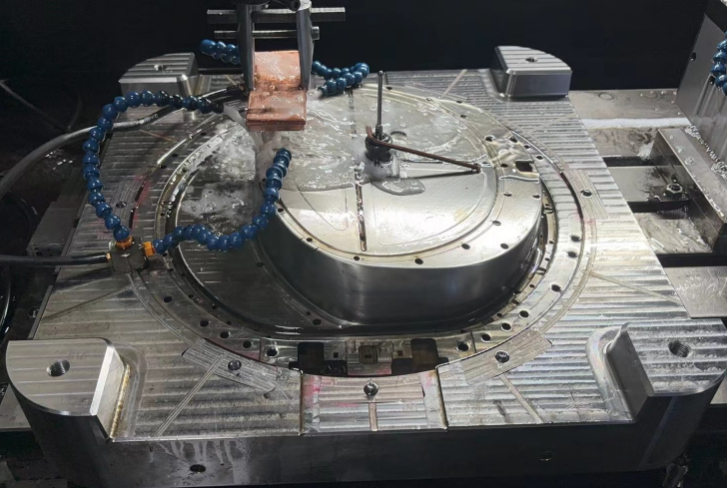
Injection mold modification is often the first option buyers consider after a product design changes. The mold may already have taken weeks to build, and a large part of the tooling budget may already be spent. Therefore, starting again is usually the last option anyone wants.
Fortunately, many design changes can still be handled by modifying the existing mold.
However, not every mold should be saved.
A small hole-position change may only need a new insert. In contrast, a major change to the product size, parting line, slider structure, or cavity layout may affect much more of the tool.
So the real question is not:
“Can this mold be modified?”
Technically, many molds can be changed if enough welding, machining, and rebuilding are allowed.
Instead, buyers should ask:
“Does injection mold modification still make sense compared with building a new mold?”
What Is Injection Mold Modification?
Injection mold modification means changing an existing mold so it can produce an updated product or correct an existing problem.
Depending on the change, the work may include:
- CNC machining
- EDM
- Wire cutting
- Welding
- New inserts
- Slider modification
- Lifter modification
- Ejector changes
- Cooling changes
- Gate changes
- Venting improvement
- Polishing
- Texture repair
- Component replacement
Some changes are simple. Others affect the basic mold structure.
For this reason, the supplier should first compare the new product data with the current mold design.
Then the affected areas can be identified before steel is changed.
This step is important because a modification that looks small on the product drawing may require several mold components to be changed.
Injection Mold Modification Is Easier When Steel Can Be Removed
One basic rule is simple:
Removing steel is usually easier than adding steel.
For example, suppose a pocket needs to become 0.5 mm deeper.
If enough steel remains, the mold can often be machined directly. As a result, the change is relatively straightforward.
The opposite situation is more difficult.
If the same pocket must become 0.5 mm shallower, steel must be added back.
In that case, the supplier may need:
- Welding
- A new insert
- A replacement cavity block
- EDM
- Re-machining
- Re-polishing or re-texturing
Welding is common in mold repair. However, it can introduce new risks.
These may include:
- Hardness differences
- Local deformation
- Surface marks
- Polishing differences
- Reduced local mold life
Therefore, before estimating an injection mold modification, the mold maker should first determine whether the change requires steel removal or steel addition.
Small Product Changes Are Usually Easier to Modify
Many local design changes can be handled without rebuilding the whole mold.
Common examples include:
- Increasing a hole diameter
- Enlarging a slot
- Reducing a rib
- Adjusting a boss
- Changing a local radius
- Modifying a snap feature
- Adjusting a sealing surface
- Correcting a local dimension
- Changing an ejector position
- Adding venting
These changes are even easier when the affected feature is located in a separate insert.
For example, if a boss is formed by a removable insert, the supplier may only need to remake that insert.
By comparison, if the same feature is machined directly into a large cavity block, the repair can become more complicated.
This is one reason good mold design often uses inserts around critical or high-risk areas.
At Fentormold, our injection mold manufacturing work considers not only how the mold will run, but also how practical future repair and modification may be.
A small design decision during mold construction can make later changes much easier.
Product Size Changes Need More Care
Changing the overall size of a product is different from changing one local feature.
Even a small size increase can affect many areas of the mold.
For example, a change in part length, width, or height may affect:
- Core and cavity
- Parting line
- Sliders
- Lifters
- Ejection
- Cooling
- Runner
- Gate position
- Insert dimensions
- Mold strength
A 1 mm product change may sound minor.
However, if that 1 mm touches several mold mechanisms, the work can spread through the entire tool.
Therefore, injection mold modification should be evaluated as a complete system.
The engineering team should compare the old and new 3D models first.
After that, every affected mold area should be marked before a final modification price is given.
Ribs and Bosses Can Be Simple or Difficult
Ribs and bosses are often changed after assembly testing or prototype evaluation.
Typical changes include:
- Moving a screw boss
- Increasing rib thickness
- Adding a support feature
- Changing boss height
- Increasing local strength
In many cases, these modifications are possible.
However, the mold structure behind the feature matters.
A boss may also contain:
- A core pin
- Cooling
- An ejector pin
- A separate insert
So moving one boss may require several related mold changes.
In addition, changing a rib or boss can affect molding quality.
For example, thicker areas may increase the risk of sink marks. A moved boss may also affect warpage or ejection.
Therefore, the supplier should review both the mold structure and the molding behavior before changing the steel.
Can Sliders, Lifters, and Undercuts Be Modified?
Yes, but these changes usually need more caution.
If a product update creates a new undercut, the mold may require:
- A new slider
- A larger slider
- A new lifter
- New angle pins
- Additional guides
- Mold-base changes
At this point, the work is no longer a simple cavity correction.
Instead, it affects the mechanical movement of the mold.
If enough space exists, modifying the existing structure may still be practical.
However, if the mold is already compact, adding another slider or lifter can become difficult.
In some cases, forcing a new mechanism into an existing tool creates more risk than building a new mold.
Therefore, the available space and mold structure should be checked before the modification begins.
Injection Mold Modification After a Material Change
A material change can create a different type of problem.
For example, the original mold may have been built for ABS, but the product later changes to:
- PC
- POM
- PA
- PA + GF
- PBT
- Another resin with different shrinkage
Even if the product geometry stays the same, the molded dimensions may change.
This happens because different plastics have different shrinkage behavior.
In addition, the new material may need different:
- Gate sizes
- Venting
- Mold temperatures
- Cooling conditions
- Surface requirements
- Tool-steel considerations
If the shrinkage difference is small, injection mold modification may be enough.
However, a large material change can affect many dimensions at the same time.
For that reason, the new material should be reviewed before machining begins.
Otherwise, the mold may be corrected first and then require another correction after the new material is tested.
Gate Changes Are Often Possible
Gate modification is common during mold trials.
The original gate may cause:
- Weld lines
- Flow marks
- Air traps
- Gate blush
- High pressure
- Uneven filling
- Warpage
Depending on the mold structure, the supplier may adjust:
- Gate size
- Gate depth
- Gate width
- Gate location
- Runner dimensions
- Number of gates
Some of these changes are simple.
For example, increasing gate size may only require local machining.
Moving a gate to a completely different location is more difficult.
That change may also affect:
- Runner design
- Cooling
- Ejectors
- Hot runner components
Therefore, the full mold layout should be checked before moving a gate.
If repeated trials are being used to correct filling problems, our article on reducing mold trial times explains why every trial should have a clear technical purpose.
Cosmetic Surfaces Need Special Attention
Some mold changes are technically possible but still risky for appearance.
This is especially important for:
- High-gloss parts
- Textured parts
- Visible automotive components
- Consumer electronics housings
- Transparent parts
For example, welding directly on a visible surface may leave a difference after polishing or texturing.
Texture repair is possible. However, matching the original surface perfectly is not always easy.
The same problem can happen on high-gloss parts.
A small repair area may reflect light differently from the surrounding cavity surface.
Therefore, if welding is required on a cosmetic area, the buyer should be told about the appearance risk before modification.
In some cases, replacing the whole cosmetic insert is safer than repairing it several times.
When Injection Mold Modification Starts Becoming Risky
A mold does not become better every time it is modified.
Over time, repeated correction can reduce stability.
Be careful if the mold has already gone through:
- Multiple welding repairs
- Several dimensional corrections
- Repeated EDM
- Heavy hand fitting
- Slider modification
- Parting-line repair
- Insert replacement
- Cooling changes
Eventually, the physical mold may be very different from the original design.
This creates two problems.
First, future repair becomes harder because the drawings may no longer match the actual tool.
Second, repeated welding and cutting may weaken some areas.
For this reason, good injection mold documentation becomes more important after major modifications.
Whenever possible, the latest mold drawings should be updated to reflect the actual steel condition.
Compare Modification Cost With the Remaining Mold Life
The cheapest immediate option is not always the cheapest long-term option.
Suppose an existing mold originally cost $20,000.
Now a major injection mold modification costs $6,000.
At first, modification looks much cheaper than another $20,000 mold.
However, buyers should also ask:
- How many cycles has the mold already run?
- How much welding has already been done?
- Are sliders or lifters worn?
- Is the mold base still in good condition?
- Will the modification reduce mold life?
- How long will the project continue?
- What is the annual production quantity?
If the mold is still in good condition, the modification may be good value.
On the other hand, if the mold is already near the end of its useful life, another large repair may not make sense.
In that situation, a new mold may offer better long-term value.
When Is a New Mold the Better Choice?
A new mold should be considered when the design change affects most of the tool.
Typical situations include:
- Major overall size change
- New parting-line concept
- Large cavity restructuring
- Several new sliders or lifters
- Completely different geometry
- Large material shrinkage change
- Heavy previous mold repair
- Insufficient space for new mechanisms
- Significant mold wear
- Modification cost close to new mold cost
Another warning sign is uncertainty.
For example, a supplier may say:
“We need to weld this area first. After the next trial, we will know whether the slider also needs modification.”
Sometimes this is unavoidable.
However, if many mold areas must be changed step by step without a clear final plan, the risk increases.
In that case, a new mold may actually be easier to control.
Rework or New Mold: Compare Both Before Cutting Steel
For a major design change, buyers should ask for two options:
Option A: Modify the existing mold
and
Option B: Build a new mold
Then compare them carefully.
| Item | Mold Modification | New Mold |
|---|---|---|
| Initial cost | Usually lower | Higher |
| Lead time | Usually shorter | Longer |
| Technical uncertainty | Can be higher | Usually easier to control |
| Mold life | Continues from current condition | Starts fresh |
| Design flexibility | Limited by old structure | Much greater |
| Cosmetic repair risk | Possible | Lower |
| Future maintenance | Depends on current tool | Easier to plan |
For example, a $5,000 modification may make sense if the mold is still strong and has years of production life left.
However, the same $5,000 may be poor value if the tool already has heavy welding, worn sliders, and several previous repairs.
So price should not be the only factor.
Remaining mold life and technical risk matter just as much.
Run Another Trial After Significant Injection Mold Modification
Machining completion does not mean the mold is ready for production.
After a significant injection mold modification, another mold trial is usually required.
The trial should check:
- Updated dimensions
- New features
- Appearance
- Ejection
- Slider movement
- Lifter movement
- Flash
- Filling
- Warpage
- Assembly
- Cooling stability
If the change affects critical dimensions, new measurement reports may also be needed.
In addition, the mold should run long enough to confirm that the result is stable.
For projects continuing into injection molding production, the modified tool should be approved under stable molding conditions before normal production resumes.
What Information Is Needed for an Injection Mold Modification Quote?
If another supplier needs to evaluate the mold, provide as much technical information as possible.
Ideally, send:
- Old product 3D
- New product 3D
- Product 2D drawings
- Mold 3D
- Mold 2D
- Current mold photos
- Mold steel information
- Existing samples
- Modification history
- Current problems
- New material information
- Expected production volume
Most importantly, clearly show the difference between the old product and the new design.
This helps the mold engineer separate local changes from structural changes.
As a result, the quotation can be more accurate.
Without enough information, a supplier may only be able to give a rough estimate.
Final Thoughts
Injection mold modification can be a practical way to handle product design changes without rebuilding the entire tool.
Small changes to holes, ribs, bosses, inserts, gates, and local dimensions can often be completed efficiently.
However, modification has limits.
Once changes affect the parting line, major mold mechanisms, overall size, several cavities, or heavily repaired steel, the risk increases quickly.
Therefore, before choosing rework, compare three things:
Modification cost, remaining mold life, and technical risk.
If the existing tool is still in good condition and the changes are local, modification is often the better option.
On the other hand, if the mold has already been heavily repaired or the new product is fundamentally different, a new mold may provide a cleaner and safer solution.
If you have an existing mold and an updated product design, Fentormold can compare the old and new 3D files, review the current mold structure, and evaluate whether modification or a new mold is the more practical option before steel is changed.