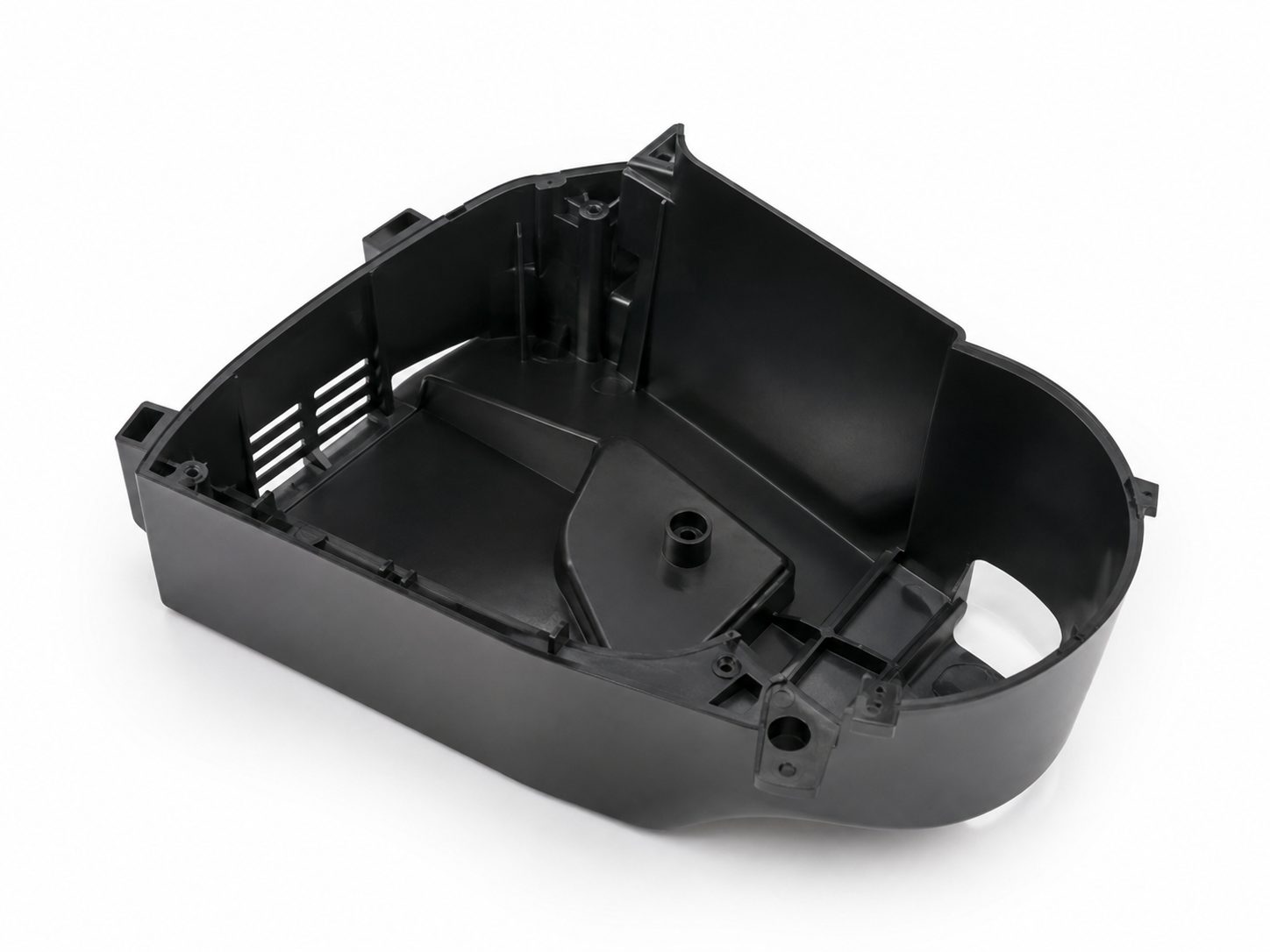
Injection molding sample approval is more than checking whether a few parts look acceptable. Once a sample is approved, it often becomes the reference for future production, quality inspection, and communication between the buyer and supplier.
That is why sample approval needs to be clear.
A part may look good but still have a critical dimension outside tolerance. Another sample may meet the drawing but have a surface mark the buyer does not want in production.
If these details are not confirmed before mass production starts, both sides may later have different ideas about what “approved” actually means.
The purpose of injection molding sample approval is therefore simple:
Create one clear production standard before larger quantities are made.
What Does Injection Molding Sample Approval Mean?
Injection molding sample approval means the buyer reviews the molded samples and confirms that the agreed requirements have been met before production moves forward.
Depending on the project, this may include:
- Dimensions
- Appearance
- Color
- Material
- Assembly
- Function
- Surface texture
- Part weight
- Warpage
- Gate marks
- Parting-line condition
- Packaging requirements
For some simple parts, approval may be straightforward.
For a technical component, however, several different checks may be needed before the part can become the production reference.
The important point is that approval should be based on agreed requirements rather than a general impression that the part “looks fine.”
Do Not Approve a Sample From Appearance Alone
Appearance is important, especially for visible consumer products.
However, it is only one part of the approval process.
A sample may look excellent but still have problems with:
- Hole size
- Assembly position
- Flatness
- Snap fit
- Sealing
- Thread dimensions
- Wall thickness
- Functional movement
For this reason, injection molding sample approval should normally combine visual review with dimensional and functional checks.
If a 2D drawing exists, critical dimensions should be compared against that drawing before approval.
Our guide on injection molding tolerances explains why material shrinkage, part geometry, mold construction, and molding conditions can all influence the final dimensions.
A good-looking part is not automatically a production-ready part.
Injection Molding Sample Approval Should Start With the Latest Drawing
Before signing off a sample, confirm that everyone is using the same product revision.
This sounds basic, but it causes many avoidable problems.
For example:
- Buyer reviews Rev. C
- Mold supplier is working from Rev. B
- Inspection report uses an older 2D drawing
- A small design update was sent by email but never added to the final file
Then the sample may be approved against the wrong standard.
Before final approval, confirm:
- Final 3D revision
- Final 2D revision
- Material grade
- Color specification
- Surface requirement
- Latest approved engineering changes
This becomes especially important when the mold has already gone through several rounds of modification.
The physical mold, latest drawing, and approved sample should all represent the same product version.
Check Critical Dimensions Before Sample Sign-Off
Not every dimension needs the same level of attention.
The most important dimensions are usually those that affect:
- Assembly
- Fit
- Sealing
- Movement
- Strength
- Electrical connection
- Alignment
- Functional performance
For example, an external decorative dimension may tolerate slightly more variation than a pin hole used for assembly.
During injection molding sample approval, critical dimensions should be clearly identified.
Depending on the part, inspection may use:
- Calipers
- Micrometers
- Pin gauges
- Height gauges
- Projectors
- CMM
- Custom inspection fixtures
For multi-cavity molds, samples should also be identified by cavity where necessary.
Otherwise, one bad cavity can be hidden inside a set of mixed samples.
Injection Molding Sample Approval for Multi-Cavity Molds
A multi-cavity mold creates an additional approval question:
Are you approving one good sample, or all cavities?
Suppose an eight-cavity mold produces eight parts.
Seven cavities are within tolerance.
One cavity produces a hole that is consistently oversized.
If the buyer only checks a mixed bag of samples, the problem may not be obvious.
For this reason, injection molding sample approval for multi-cavity tooling should consider cavity-to-cavity consistency.
Useful checks may include:
- Critical dimensions by cavity
- Part weight by cavity
- Visual defects by cavity
- Gate appearance
- Filling consistency
- Ejection condition
This does not mean every dimension must be fully inspected on every cavity forever.
However, during mold approval, it is useful to know whether all cavities are producing similar results.
Appearance Standards Should Be Specific
Statements such as:
“Surface must be good.”
are too vague.
Different people may have very different opinions about what “good” means.
Instead, define the visible requirements.
Depending on the product, this may include:
- Sink marks
- Flow marks
- Weld lines
- Silver streaks
- Gate marks
- Ejector marks
- Scratches
- Flash
- Parting-line mismatch
- Texture
- Gloss
- Color difference
Some defects may be completely unacceptable.
Others may be acceptable in a hidden area but not on the main visible surface.
For appearance-critical parts, the approved physical sample is often extremely useful.
It gives both buyer and supplier something real to compare against.
The Approved Sample Should Represent Normal Production Conditions
This point is often missed.
A supplier may spend a long time adjusting molding parameters to create a few excellent samples.
But if those settings are difficult to maintain, the sample may not represent stable production.
Therefore, before final injection molding sample approval, ask whether the mold was running under normal and repeatable conditions.
Check questions such as:
- Was the mold temperature stable?
- Was the machine running continuously?
- Was the cycle time realistic?
- Was the correct production material used?
- Were parts removed automatically as intended?
- Was the process stable for enough cycles?
A “perfect” sample made under special conditions is less useful than a good sample made from a stable process.
Our article on how to reduce mold trial times discusses why mold trials should gradually move from problem correction toward process stability.
Material and Color Must Be Confirmed
Samples made from the wrong resin should not normally become the final production standard.
Even similar plastic grades can behave differently.
Material changes may affect:
- Shrinkage
- Surface appearance
- Strength
- Flexibility
- Warpage
- Color
- Molded dimensions
Therefore, the final approved sample should ideally use the same material grade intended for production.
The same applies to color.
If production requires a specified Pantone, RAL, masterbatch, or customer-approved color, the reference should be recorded.
For appearance-sensitive projects, a physical color sample can also be retained.
Functional Testing Is Part of Sample Approval
Some parts cannot be approved from measurements alone.
They need to work.
For example:
- Snap-fit components must assemble correctly
- Sealing parts may need leak testing
- Gears must rotate smoothly
- Clips must hold securely
- Housings must fit mating parts
- Buttons must move correctly
- Connectors must engage properly
In these cases, injection molding sample approval should include actual functional testing.
The molded part should be checked in the real assembly whenever possible.
This is important because individual dimensions may all be within tolerance while the finished assembly still does not perform correctly.
Do Not Ignore Warpage and Part Stability
Some molded dimensions change after the part leaves the machine.
This is particularly important with:
- Large flat parts
- Glass-filled materials
- Nylon
- Parts with uneven wall thickness
- Components with strong internal stress
A sample measured immediately after molding may not have the same dimensions several hours later.
Therefore, dimensional approval may need to consider a defined conditioning period.
For example:
- Measure after 24 hours
- Measure after moisture conditioning
- Measure after assembly
- Measure after specified environmental exposure
The correct method depends on the material and product requirement.
The key is consistency.
Both sides should use the same measurement condition when comparing future production.
What Is a Golden Sample?
A golden sample is the physical part kept as the approved production reference.
It can be useful for checking:
- Appearance
- Color
- Texture
- Gate marks
- Parting line
- Cosmetic limits
- General workmanship
Usually, both the buyer and supplier should keep an approved reference sample where practical.
The sample should be identified with information such as:
- Part number
- Revision
- Mold number
- Approval date
- Cavity number if relevant
However, a golden sample should not replace the engineering drawing.
The drawing remains important for dimensions and technical requirements.
The physical sample is mainly useful for characteristics that are difficult to describe completely with numbers.
Injection Molding Sample Approval Should Record Acceptable Defects
This is especially useful for cosmetic products.
Sometimes a sample contains a minor mark that the buyer accepts.
If the sample is approved without any note, the supplier may assume similar marks are acceptable in future production.
The buyer may later disagree.
Therefore, if a defect is accepted only under specific conditions, record it.
For example:
- Small gate mark accepted within 1.0 mm
- Minor parting line permitted on hidden surface
- Slight gloss difference accepted on internal area
- Ejector mark acceptable if not raised
This reduces subjective arguments later.
A clear standard is much easier to manage than repeated discussions based on photographs.
What Should Buyers Sign Off Before Production?
Before completing injection molding sample approval, buyers should confirm the items that actually matter for the project.
A practical checklist may look like this:
| Item | What to Confirm |
|---|---|
| Product revision | Correct 2D and 3D files |
| Material | Correct resin and grade |
| Color | Approved reference or specification |
| Critical dimensions | Within agreed tolerance |
| Appearance | Cosmetic requirements accepted |
| Assembly | Fits mating components |
| Function | Works as intended |
| Cavity consistency | Checked where required |
| Part weight | Stable if important |
| Warpage | Within acceptable range |
| Surface | Texture, gloss, polish approved |
| Process | Stable under normal molding conditions |
| Golden sample | Reference sample identified and retained |
The exact checklist can be shorter or longer depending on the project.
The goal is not paperwork.
The goal is to avoid uncertainty after production starts.
Keep the Approval Sample and Records Together
Once the sample is approved, keep the supporting information.
This may include:
- Approved sample
- Dimensional report
- Material information
- Color standard
- Final drawing
- Sample photographs
- Mold trial report
- Approval email or signed record
Good injection mold documentation makes later production, maintenance, and supplier transfer much easier.
If a quality issue appears six months later, the supplier can compare the new production part with the approved reference rather than relying on memory.
What Happens If the Mold Is Modified After Approval?
Any significant mold change can affect the approved standard.
For example:
- Cavity welding
- New inserts
- Gate changes
- Slider repair
- Cooling modification
- Dimensional correction
After a major change, the supplier should determine whether the affected features need to be approved again.
The same applies if:
- Material changes
- Color changes
- Product revision changes
- Production moves to a different mold
- Major molding conditions change
The original sample should not automatically remain valid if the product or process has changed significantly.
Sample Approval Is Not the End of Quality Control
Approval does not mean future production no longer needs inspection.
It means the production standard has been defined.
Once mass production begins, the supplier still needs controls such as:
- First-piece inspection
- In-process inspection
- Material verification
- Visual checks
- Dimensional sampling
- Mold maintenance
- Defect control
For projects that continue into injection molding production, the approved sample and drawing provide the reference for later quality checks.
This is why the approval stage matters so much.
If the production standard is unclear from the beginning, later inspection becomes much harder.
Common Injection Molding Sample Approval Mistakes
Several mistakes appear repeatedly.
Approving Only From Photos
Photos can be useful for appearance review.
However, they cannot reliably confirm dimensions, assembly, surface feel, or function.
Approving the Wrong Revision
Always verify the product revision before final sign-off.
Ignoring Cavity Differences
For multi-cavity molds, check whether one cavity behaves differently from the others.
Approving Before the Process Is Stable
A few good shots do not always represent production capability.
Not Keeping a Reference Sample
Without a golden sample, later cosmetic discussions become much more subjective.
Leaving Acceptance Criteria Vague
Terms like “good appearance” or “normal flash” are not precise enough for critical products.
Final Thoughts
Injection molding sample approval should create a clear bridge between mold trials and stable production.
The approved sample should represent the correct product revision, material, dimensions, appearance, function, and normal molding conditions.
For many projects, the best production standard is a combination of:
Final drawing + inspection report + approved physical sample
The drawing controls technical dimensions.
The report confirms measured results.
The physical sample helps define appearance and workmanship.
Together, they give both buyer and supplier a clear reference.
Before approving an injection molded part, ask one simple question:
“If we receive 10,000 parts like this, will we be satisfied?”
If the answer is yes—and the dimensions, function, material, and process are also confirmed—then the sample is ready to become the production standard.
If you are developing a new injection molded part, Fentormold can support mold trials, dimensional review, sample correction, and production approval before the project moves into regular manufacturing.