Injection mold pricing factors can make a major difference in the final tooling price. When buyers receive an injection mold quotation, a higher price does not always mean that a supplier is simply charging more. The difference may come from mold complexity, steel selection, cavity count, tolerances, cooling requirements, hot runners, or the expected tool life.
For procurement teams, understanding these factors before placing an order makes it much easier to judge whether a tooling specification is appropriate.
A simple mold for a small plastic part may require only a basic mold structure. In contrast, a large production mold with multiple slides, tight tolerances, complex cooling, a hot runner system, and a long service-life requirement requires considerably more engineering and machining.
That is why buyers should look beyond the final quotation number.
What Are the Main Injection Mold Pricing Factors?
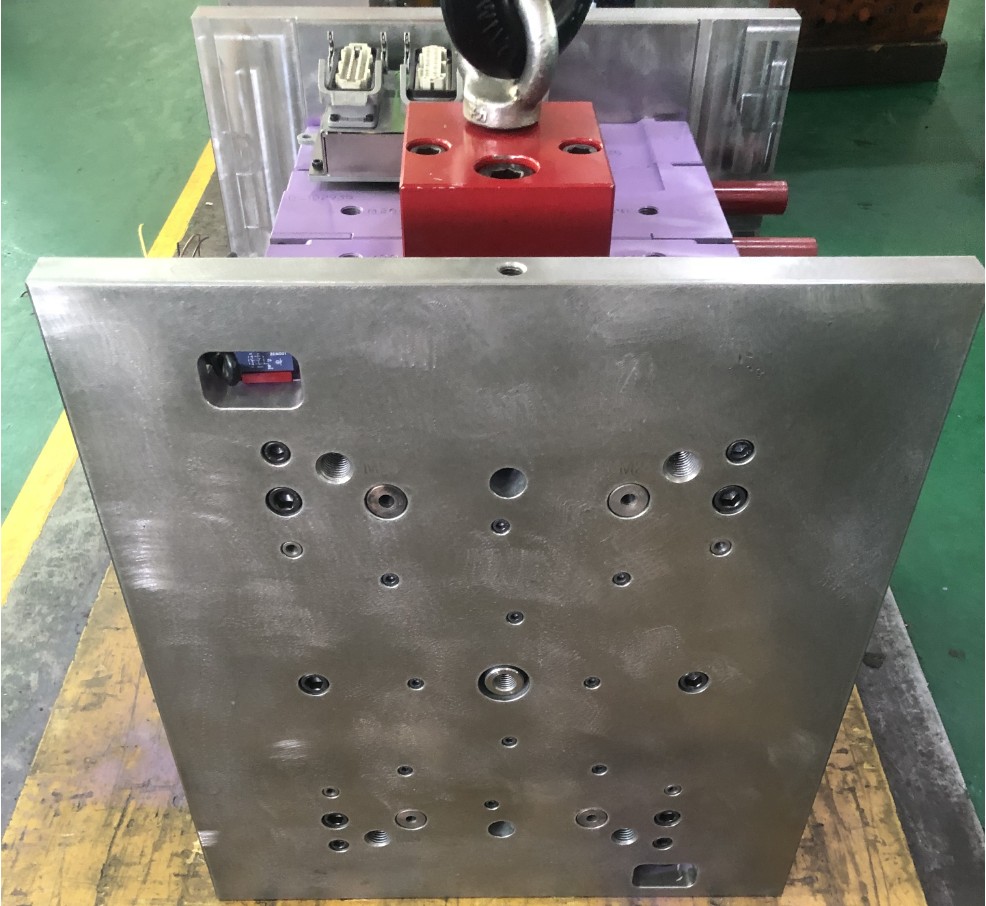
The main injection mold pricing factors usually include:
- Part geometry and complexity
- Mold size
- Number of cavities
- Mold steel
- Expected mold life
- Slides, lifters, and special inserts
- Dimensional tolerances
- Surface finish
- Hot runner requirements
- Cooling and testing requirements
These factors do not have the same impact on every project. For example, cavity count can be critical for high-volume production, while steel selection may be more important when the mold must withstand abrasive materials.
The right tooling specification should match the actual production requirements instead of simply using the most expensive option.
1. Part Complexity Is a Major Injection Mold Pricing Factor
Part geometry is one of the first things a mold engineer evaluates.
A simple plastic part with straight walls and no undercuts may require a relatively straightforward mold. However, complicated geometry can require additional mechanisms and machining.
Typical examples include:
- Slides
- Lifters
- Angular lifters
- Core pulls
- Interchangeable inserts
- Unscrewing mechanisms
- Complex ejection systems
- Multiple parting surfaces
Each additional mechanism requires engineering, machining, assembly, and future maintenance.
This makes part complexity one of the most important injection mold pricing factors for buyers to understand.
For example, a small part with several undercuts may require more expensive tooling than a larger part with a simple geometry.
Before approving the mold design, ask whether every undercut or special feature is actually necessary.
A proper injection mold DFM analysis can identify opportunities to simplify the part and mold before manufacturing begins.
How Buyers Can Reduce Complexity
Before the mold is released for manufacturing, check:
- Can unnecessary undercuts be removed?
- Can the parting line be simplified?
- Can a slide be avoided?
- Can some inserts be eliminated?
- Can difficult machining areas be redesigned?
A small change to the plastic part can sometimes eliminate an expensive mold mechanism.
2. Mold Size Is Another Injection Mold Pricing Factor
Mold size directly affects material usage, machining requirements, and machine capacity.
A larger mold generally requires:
- More mold steel
- Larger mold plates
- More CNC machining
- Larger mold components
- More assembly work
- Greater handling capacity
- Higher shipping weight
The size of the mold also affects the injection molding machine required for production.
For example, an automotive interior component may require a large mold base and extensive cooling system, while a small electronic component may use a much smaller tool.
Therefore, mold size should be considered when evaluating injection mold pricing factors rather than looking only at the size of the finished plastic part.
If you are developing a new project, our guide to injection mold size explains the main considerations.
3. Cavity Count Can Change Injection Mold Pricing Significantly
The number of cavities is another major injection mold pricing factor.
A single-cavity mold produces one part per molding cycle. A four-cavity mold produces four parts during the same cycle, while an eight-cavity mold produces eight.
However, adding cavities involves more than simply adding cavity pockets.
A multi-cavity mold may require:
- Additional cavity and core machining
- More inserts
- A balanced runner system
- More cooling circuits
- Additional ejector components
- More precise cavity matching
- Mold-flow analysis
The runner system becomes especially important because every cavity needs to fill consistently.
Our article on single-cavity vs. multi-cavity molds explains the advantages and limitations of different cavity configurations.
Should Buyers Always Choose More Cavities?
No.
A high-cavity mold can make sense for millions of parts, but it may not be economical for a low-volume project.
The better question is:
What cavity count provides the right balance between tooling investment and expected production volume?
4. Mold Steel Is a Key Injection Mold Pricing Factor
Mold steel has a direct effect on tooling requirements.
Different steel grades offer different levels of:
- Wear resistance
- Corrosion resistance
- Hardness
- Toughness
- Polishability
- Thermal performance
- Dimensional stability
A prototype or low-volume mold does not necessarily need the same steel specification as a production mold expected to run for hundreds of thousands of cycles.
The appropriate steel depends on:
- Plastic material
- Production volume
- Expected tool life
- Surface finish
- Material abrasiveness
- Corrosive additives
- Dimensional requirements
For example, glass-fiber-reinforced plastics can create significantly more wear than some unfilled materials.
Choosing the most expensive steel is not automatically the best decision. The steel should match the actual application.
Buyers can review our injection mold steel selection guide when preparing a tooling specification.
5. Tool Life Is One of the Most Important Injection Mold Pricing Factors
Expected mold life has a direct relationship with tooling specifications.
A mold designed for 10,000 parts does not need exactly the same construction as one expected to produce 1 million parts.
Longer tool life may require:
- Higher-grade steel
- Hardened components
- Wear-resistant inserts
- Replaceable components
- Stronger ejection systems
- Better cooling
- Improved surface treatment
- More precise machining
This is why buyers should provide the supplier with an expected production volume whenever possible.
If the expected production quantity is unclear, suppliers may make different assumptions, resulting in very different tooling specifications.
Our guide on injection mold cost vs. tool life explains why a lower initial tooling investment is not always the best long-term option.
6. Slides, Lifters, and Inserts Increase Injection Mold Pricing
Undercuts are another common source of tooling complexity.
If a plastic part cannot be removed directly from the mold, the tooling may require a slide, lifter, or another core-pulling mechanism.
These components add:
- Machining time
- EDM work
- Additional steel components
- Guide systems
- Wear surfaces
- Assembly work
- Maintenance requirements
Special inserts can also increase machining and inspection requirements.
A single simple insert may have a limited effect on the quotation. Several complicated inserts, however, can become a significant part of the tooling investment.
Understanding this is important when evaluating injection mold pricing factors because these mechanisms are often driven directly by part geometry.
For more information, see our guide to lifter vs. slider in injection molds.
7. Tight Tolerances Can Increase Injection Mold Pricing
Not every plastic component requires extremely tight tolerances.
When a drawing specifies very tight dimensions, the mold manufacturer may need additional:
- Precision CNC machining
- Grinding
- EDM
- Measurement
- Mold fitting
- Trial adjustments
- Inspection
Tight tolerances can therefore increase both machining time and mold trial requirements.
Buyers should also distinguish between mold tolerance and molded-part tolerance.
The final plastic part can be affected by:
- Material shrinkage
- Cooling conditions
- Mold temperature
- Injection parameters
- Part geometry
- Environmental conditions
Therefore, specifying unnecessarily tight tolerances can increase tooling requirements without improving the actual product.
Our guide to injection molding tolerances provides more information about selecting practical tolerances.
8. Surface Finish Is an Important Injection Mold Pricing Factor
Surface finish requirements can significantly change mold finishing work.
A standard machined surface is very different from a high-gloss polished surface.
Depending on the application, the mold may require:
- Fine polishing
- Diamond polishing
- EDM finishing
- Texture processing
- Additional manual finishing
- Extra inspection
High-gloss or transparent plastic parts can be particularly demanding.
For visible consumer products, cosmetic surfaces should be clearly identified in the drawing so the mold manufacturer knows which areas require special treatment.
For guidance, see how to choose the right injection mold surface finish.
9. Hot Runner Systems Can Increase Injection Mold Pricing
Hot runner systems can increase the initial tooling investment compared with conventional cold runner molds.
However, that does not mean a hot runner is always more expensive over the entire production life.
Hot runners can provide benefits such as:
- Reduced runner waste
- Better material utilization
- Faster production
- Improved multi-cavity filling
- Potentially shorter cycles
- Easier automation
For high-volume production, these advantages may justify the additional tooling investment.
For low-volume production, a cold runner may be a more practical option depending on the part and material.
Therefore, hot runner selection should be evaluated as part of the overall injection mold pricing factors, not as an isolated price item.
See our hot runner vs. cold runner injection mold comparison for more details.
10. Cooling and Testing Requirements Affect Injection Mold Pricing
Cooling design is sometimes underestimated during the purchasing process.
A simple mold can use relatively straightforward cooling channels. A complex mold may require carefully positioned circuits around cores, slides, inserts, and other difficult areas.
A poor cooling design can result in:
- Longer cycle times
- Uneven shrinkage
- Warpage
- Dimensional variation
- Longer production times
For production molds, cooling should therefore be considered during the design stage.
Testing and inspection requirements can also affect tooling investment.
A buyer may require:
- T1 trial
- T2 or additional trials
- CMM inspection
- Full dimensional inspection
- Mold-flow analysis
- Sample approval
- Mold acceptance testing
- Production validation
These activities require engineering and machine time.
Our injection mold acceptance checklist explains what buyers should check before accepting a completed mold.
How Injection Mold Pricing Factors Affect Your Quotation
When reviewing a tooling quotation, buyers should not focus only on the final number.
Instead, look at what is included in the tooling specification.
| Factor | What Buyers Should Check |
|---|---|
| Part complexity | Are slides, lifters, or special mechanisms required? |
| Mold size | Is the mold base appropriate for the part? |
| Cavity count | Does the cavity count match production volume? |
| Mold steel | Is the steel suitable for the expected tool life? |
| Tool life | How many cycles is the mold designed for? |
| Tolerances | Are tight tolerances actually necessary? |
| Surface finish | Which areas require polishing or texture? |
| Hot runner | Is a hot runner justified by production volume? |
| Cooling | Is the cooling system suitable for production? |
| Testing | How many mold trials are included? |
This approach helps buyers understand what they are actually paying for.
How Buyers Can Control Injection Mold Pricing Factors
The best way to reduce tooling investment is usually not to ask the supplier for a lower price after the quotation is submitted.
Instead, control the requirements before manufacturing starts.
Simplify the Part Design
Removing unnecessary undercuts or complicated features can reduce tooling complexity.
Choose the Right Cavity Count
Match cavity count to expected production volume instead of automatically selecting the highest possible number.
Match Steel to Tool Life
A low-volume project may not require the same steel specification as a long-term production mold.
Review Tolerances
Use tight tolerances only where they are required for product function.
Evaluate Hot Runner Requirements
Consider production volume, material waste, cycle time, and automation before selecting a hot runner.
Review the Mold Design Before Steel Cutting
Design changes are much easier and cheaper before machining begins.
A proper injection mold design review can identify unnecessary complexity before it becomes a manufacturing cost.
Why the Lowest Injection Mold Price Is Not Always the Best Choice
Buyers naturally want competitive pricing. However, the lowest quotation does not automatically represent the best tooling value.
A lower-priced mold may have:
- Lower-grade steel
- Shorter expected tool life
- Simpler cooling
- Fewer spare components
- Less testing
- Different tolerance assumptions
- A simpler mold structure
That does not necessarily mean the supplier is offering poor quality.
The specifications may simply be different.
This is why buyers should evaluate injection mold pricing factors together with expected production requirements.
The real objective is not to find the cheapest mold.
It is to find a mold specification that provides the required quality and production life without unnecessary tooling investment.
Injection Mold Pricing Factors Buyers Should Check Before Ordering
Before approving a mold quotation, confirm the following:
- [ ] Part geometry has been reviewed
- [ ] Cavity count matches production requirements
- [ ] Mold steel is clearly specified
- [ ] Expected tool life is confirmed
- [ ] Slides and lifters are identified
- [ ] Critical tolerances are clearly defined
- [ ] Cosmetic surfaces are specified
- [ ] Hot runner requirements are confirmed
- [ ] Cooling requirements have been reviewed
- [ ] Mold trial requirements are agreed
- [ ] Inspection requirements are clear
- [ ] Spare parts are discussed
- [ ] Maintenance requirements are understood
These checks help buyers understand the real reasons behind a tooling quotation.
Final Thoughts on Injection Mold Pricing Factors
The final price of an injection mold is determined by much more than the size of the mold or the number of cavities.
The most important injection mold pricing factors include part complexity, mold size, cavity count, steel selection, tool life, slides and lifters, tolerances, surface finish, hot runners, cooling, and testing requirements.
For procurement teams, the best approach is to decide which requirements are genuinely necessary before the mold enters production.
A well-designed mold does not need to be the most expensive mold.
It needs to be the right mold for the expected production volume, part quality, service life, and application.
If you are preparing an RFQ, Fentormold can review the part design and tooling requirements before manufacturing. This can help identify unnecessary complexity and establish a practical mold specification.
You can learn more about our injection mold manufacturing service and discuss your project requirements with our engineering team.