
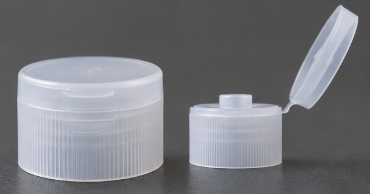
A living hinge is a thin plastic section that connects two thicker plastic areas and allows them to open and close as one molded part.
It is commonly used in flip-top caps, plastic boxes, covers, and packaging.
The structure looks simple, but a good living hinge depends mainly on three things:
- The right material
- The right hinge thickness
- The right plastic flow direction
Why Is PP the Best Material for a Living Hinge?
Polypropylene (PP) is the most common material for a true living hinge.
The main reason is its excellent fatigue resistance. A properly designed PP hinge can bend repeatedly without cracking.
PE can also be used in some applications, but PP is still the first choice for most living hinge products.
Materials such as PC, PMMA, ABS, and other rigid plastics are generally not recommended for long-life living hinges.
They may work for very limited bending, but repeated flexing can cause whitening or cracking.
How Thin Should a Living Hinge Be?
The hinge area must be much thinner than the normal product wall.
A common starting range is around:
0.25–0.50 mm
However, the final thickness depends on:
- PP grade
- Product size
- Opening angle
- Required hinge life
The transition between the hinge and the thicker wall should be smooth.
Sharp corners should be avoided because they concentrate stress and make the hinge easier to crack.
These details should be checked during the early injection mold design stage.
Plastic Flow Direction Is Critical
For a living hinge, gate position is very important.
The plastic should flow through the hinge area in a controlled direction so that the thin section fills completely.
Poor flow can cause:
- Weak hinge areas
- Short shots
- Weld lines
- Early cracking
For more complex products, filling analysis can help confirm whether the gate and flow direction are suitable before mold manufacturing.
You can also read our guide about injection mold filling balance for more information about runner and gate behavior.
Why Does a Living Hinge Turn White?
White marks usually mean the hinge is under too much stress.
Common reasons include:
- Hinge is too thick
- Bending radius is too small
- Material is too rigid
- The hinge is bent too far
- The hinge was not conditioned correctly after molding
Slight whitening does not always mean failure, but strong whitening is often a warning sign.
Why Does a Living Hinge Crack?
The most common causes are:
- Wrong material
- Poor hinge geometry
- Sharp transitions
- Incorrect gate position
- Incomplete filling
- Excessive bending
This is why the hinge should be reviewed before the mold is built.
At Fentor Mold, we normally check product structure, material, gate position, and filling risk during the DFM stage before tooling starts.
For new products, prototype injection molding can also help verify the real material and hinge function before moving to production tooling.
Conclusion
A good living hinge is not complicated.
The key points are:
Use PP, keep the hinge thin, avoid sharp transitions, and make sure the plastic flows correctly through the hinge area.
If these points are handled properly, a living hinge can provide reliable repeated opening and closing without using a separate mechanical hinge.