When purchasing a PA66 plastic part, the biggest concern is not simply whether the material can be injection molded. The real question is whether the supplier can produce parts that remain stable in dimensions and performance throughout production.
PA66 is widely used for mechanical and industrial components because it offers good strength, wear resistance, heat resistance, and chemical resistance. However, it also requires more process control than many common plastics. Moisture, material drying, mold temperature, cooling, glass fiber content, and part geometry can all affect the final result.
For buyers, this means that choosing an PA66 injection molding supplier should involve more than comparing mold prices.
Before placing an order, it is important to understand how the material behaves, what can go wrong during molding, and what questions should be included in the RFQ.
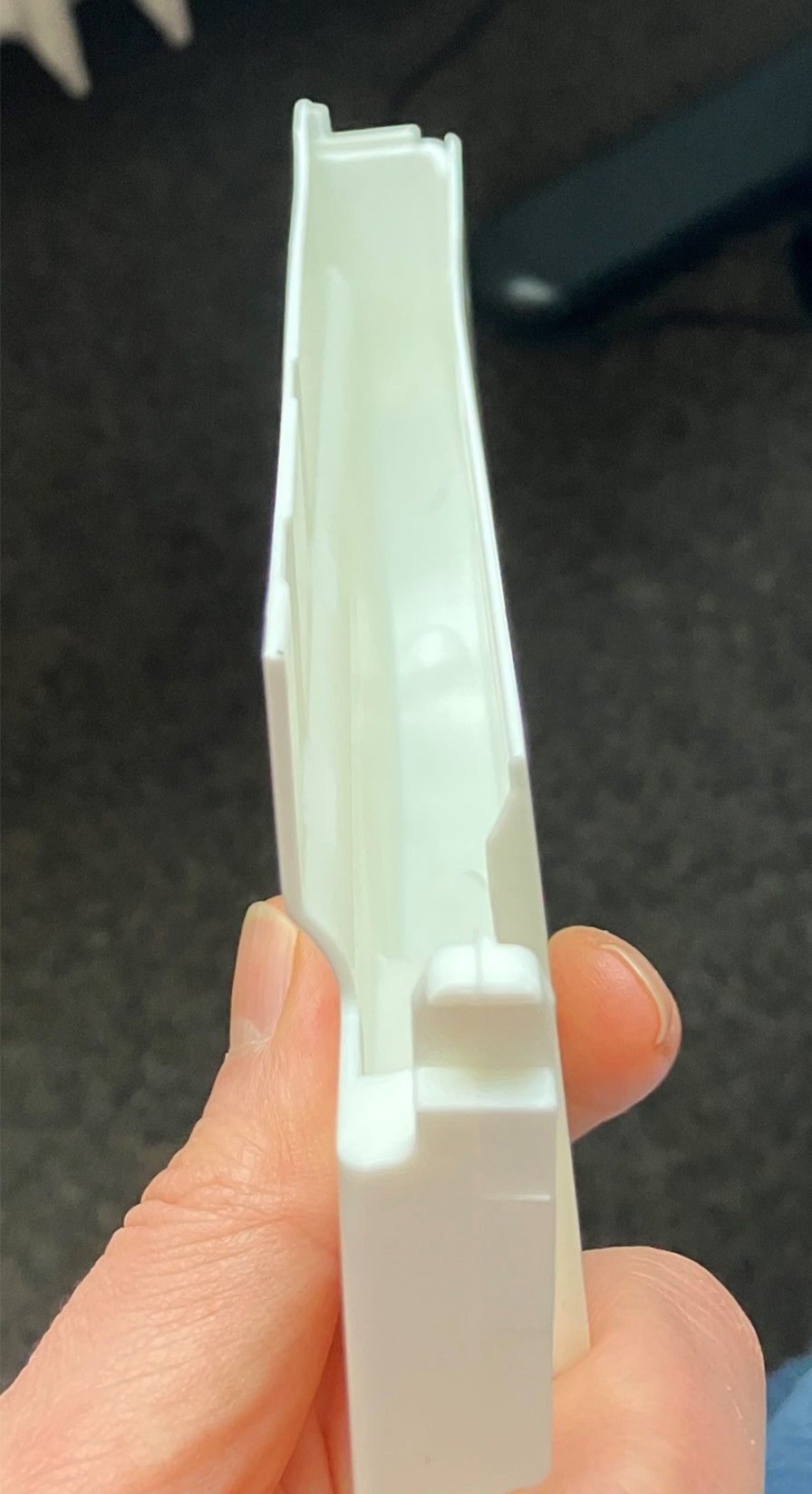
This guide focuses on the practical issues that buyers and engineers should consider when sourcing PA66 injection molded parts.
- PA66 is suitable for strong, wear-resistant, and heat-resistant plastic components.
- Moisture control is one of the most important issues in PA66 injection molding.
- Poorly dried PA66 can cause appearance, mechanical, and dimensional problems.
- Glass-filled PA66 behaves differently from unfilled PA66 during molding.
- Mold temperature and cooling design have a major effect on dimensional stability.
- Warpage can be caused by material orientation, uneven cooling, part geometry, and processing conditions.
- Tight tolerances should be reviewed with the mold supplier before tooling begins.
- Buyers should specify the exact PA66 grade rather than simply writing “Nylon 66.”
- A proper DFM review can identify potential problems before mold manufacturing starts.
Why PA66 Injection Molding Requires More Process Control
PA66 is an engineering thermoplastic, but it is not as forgiving as some general-purpose plastics.
Its processing behavior is influenced by moisture, melt temperature, mold temperature, fiber reinforcement, and cooling conditions.
For a buyer, this matters because two suppliers may quote the same PA66 part at very different prices.
One supplier may assume standard processing conditions and basic inspection.
Another may include:
- Material drying and moisture control
- Mold temperature control
- Additional mold trials
- Dimensional inspection
- Cavity balancing
- Process optimization
- Special cooling design
The lower quotation is not necessarily the better option if the part has demanding dimensional or mechanical requirements.
This is particularly important for components used in automotive, electrical, industrial, and mechanical applications.
For customers who need complete tooling and production support, Fentormold provides Injection Mold Manufacturing and Injection Molding Production.
Moisture: The First Issue to Check Before PA66 Injection Molding
PA66 is hygroscopic, which means it can absorb moisture from the surrounding environment.
This is one of the first issues that should be discussed when purchasing PA66 injection molded parts.
If the material contains excessive moisture before molding, the results may include:
- Silver streaks
- Surface defects
- Reduced mechanical properties
- Inconsistent processing
- Dimensional variation
- Changes in part performance
The problem does not end when the material leaves the molding machine.
PA66 can absorb moisture again after molding, and its dimensions and mechanical properties can change as moisture content changes.
Therefore, buyers should distinguish between:
As-molded dimensions
and
Conditioned dimensions
This distinction can be important when a component has tight dimensional requirements.
How Should PA66 Be Dried Before Injection Molding?
Proper material preparation is an important part of stable PA66 injection molding.
The exact drying temperature, time, and moisture target depend on the specific resin grade and supplier recommendations.
A professional molding supplier should therefore follow the material manufacturer’s processing data rather than using the same drying conditions for every nylon grade.
Before production, buyers should confirm:
- Exact PA66 grade
- Whether the material is virgin or regrind
- Recommended drying conditions
- Moisture requirements
- Storage conditions
- Maximum allowable regrind content
For high-performance or glass-filled PA66, these details become even more important.
A supplier that cannot clearly explain how the material will be stored and prepared deserves additional scrutiny.
How Moisture Affects PA66 Molded Parts
Moisture can affect PA66 in several ways.
During molding, excessive moisture may cause visible defects or processing instability.
After molding, absorbed moisture can also change the dimensions and mechanical behavior of the part.
This creates a common purchasing problem.
A part may pass dimensional inspection immediately after molding but show different dimensions after conditioning.
For components that must fit with other parts, the customer and supplier should agree on the dimensional inspection condition.
This is especially important for:
- Precision housings
- Gears
- Bushings
- Clips
- Mechanical brackets
- Bearing-related components
- Electrical components
If dimensional stability is critical, it should be clearly stated on the drawing and RFQ.
PA66 Injection Molding and Dimensional Stability
Dimensional stability is often more important to buyers than simply achieving a good-looking sample.
PA66 parts can change dimensions because of:
- Moisture absorption
- Material shrinkage
- Fiber orientation
- Cooling differences
- Part geometry
- Processing conditions
For this reason, the supplier should review critical dimensions during DFM rather than waiting until the first mold trial.
If your product requires tight tolerances, you can also refer to our guide on Injection Molding Tolerances: ISO & SPI when preparing the engineering drawing.
The important point is that not every dimension should automatically receive the tightest possible tolerance.
Critical dimensions should be identified based on the actual function of the component.
Why PA66 Parts Warp After Molding
Warpage is one of the common concerns when producing PA66 components.
The problem can become more noticeable with glass-filled grades because the fibers can create directional shrinkage.
A PA66 part may warp because of:
- Uneven wall thickness
- Uneven cooling
- Poor gate location
- Fiber orientation
- Residual stress
- Incorrect processing conditions
- Unbalanced mold filling
- Poor part design
A long, thin housing, for example, may be more difficult to control than a compact mechanical component.
This is why the mold design and part design need to be considered together.
For general background on preventing warpage, see How to Prevent Injection Molding Warpage After Cooling.
For a PA66 project, however, the supplier should also consider the specific material grade and reinforcement.
Glass-Filled PA66: What Changes for Mold Design?
Glass-filled PA66 is commonly selected when higher stiffness, strength, or dimensional performance is required.
However, adding glass fiber changes the molding behavior.
The fibers can influence:
- Shrinkage
- Flow
- Orientation
- Warpage
- Mold wear
- Surface appearance
The mold itself may also require greater attention to wear resistance.
This is important from a purchasing perspective because a glass-filled PA66 mold should not necessarily be quoted and designed exactly like a mold for unfilled plastic.
The supplier should know:
- Glass fiber percentage
- Resin grade
- Expected production volume
- Required mold life
- Critical dimensions
- Surface requirements
If the material is highly abrasive, mold steel and wear-resistant inserts may need to be considered.
How Mold Design Affects PA66 Parts
The quality of an PA66 injection molded part starts before the first molding trial.
Gate Location
Gate location affects filling, pressure distribution, fiber orientation, and appearance.
For glass-filled PA66, gate location can be particularly important because fiber orientation may influence dimensional behavior.
Cooling System
Cooling needs to be as balanced as practical.
Uneven cooling can contribute to:
- Warpage
- Dimensional variation
- Residual stress
- Longer cycle times
A well-designed cooling system can improve production consistency.
Wall Thickness
Sudden changes in wall thickness can create uneven cooling and shrinkage.
Where possible, the part should use consistent wall thickness and smooth transitions.
Ejection
PA66 components should be designed and molded so that ejection does not create unnecessary deformation.
Ejector locations should be reviewed according to the part geometry and functional surfaces.
Fentormold also provides Injection Mold Components Manufacturing for precision tooling components used in injection molds.
PA66 Injection Molding Process Parameters Buyers Should Discuss
Buyers do not need to become injection molding technicians, but they should understand which process parameters can affect their parts.
Melt Temperature
The correct melt temperature depends on the specific PA66 grade.
Too low or too high a temperature can affect filling, surface quality, and material performance.
The supplier should follow the resin manufacturer’s recommendations.
Mold Temperature
Mold temperature has a strong influence on crystallization and final part properties.
For precision PA66 components, mold temperature should be controlled consistently during production.
Injection Speed
Injection speed affects filling behavior and can influence weld lines, fiber orientation, and surface appearance.
Holding Pressure
Holding pressure affects packing and final dimensions.
If packing is inconsistent, dimensional variation can occur.
Cooling Time
Insufficient cooling may allow the part to deform during ejection or after removal from the mold.
However, simply increasing cooling time is not always the best solution.
The mold cooling design should be evaluated first.
Common PA66 Injection Molding Problems and Solutions
PA66 injection molding problems should be analyzed based on both material and processing conditions.
| Problem | Possible Cause | What to Check |
|---|---|---|
| Silver streaks | Excessive moisture | Material drying and storage |
| Warpage | Uneven cooling or fiber orientation | Cooling and gate design |
| Short shot | Poor filling conditions | Injection pressure and flow |
| Flash | Excessive pressure or mold mismatch | Clamping and parting line |
| Sink marks | Localized thick sections | Wall thickness and packing |
| Weld lines | Multiple flow fronts | Gate location and flow |
| Burn marks | Trapped air | Mold venting |
| Dimensional variation | Material/process instability | Moisture and process control |
A supplier should not simply increase injection pressure whenever a defect appears.
The root cause needs to be identified first.
PA66 vs POM: Which Material Is Better for Precision Parts?
Buyers sometimes compare PA66 with POM because both are used for mechanical components.
The better choice depends on the application’s requirements.
| Requirement | PA66 | POM |
|---|---|---|
| Strength | High | High |
| Wear resistance | Good | Excellent |
| Moisture absorption | Relatively high | Lower |
| Dimensional stability | Depends strongly on conditions | Generally good |
| Heat resistance | Good | Good |
| Friction performance | Good | Excellent |
| Glass fiber options | Widely available | Available |
| Precision mechanical applications | Suitable | Very suitable |
This is not a simple “which material is better” decision.
The buyer should consider:
- Load
- Temperature
- Moisture exposure
- Friction
- Wear
- Dimensional requirements
- Chemical environment
- Cost
If the component requires low friction and stable mechanical performance, POM may be worth considering.
For a detailed discussion of POM processing, see POM Injection Molding: Process, Applications & Common Defects.
What Should Buyers Tell an Injection Molding Supplier?
A supplier can only provide a reliable quotation if the project requirements are clear.
For a PA66 project, the RFQ should ideally include:
- 3D CAD file
- 2D drawing
- Exact PA66 grade
- Glass fiber percentage
- Annual production volume
- Expected mold life
- Critical dimensions
- Surface finish
- Color requirements
- Assembly requirements
- Packaging requirements
- Inspection requirements
If the customer only provides a 3D model and asks for a price, the supplier may need to make assumptions.
Those assumptions can affect both the quotation and the final mold design.
For more detailed sourcing guidance, see our Injection Mold RFQ Checklist.
PA66 Injection Molding RFQ Checklist
Before approving a supplier, buyers should confirm the following:
- [ ] Exact PA66 resin grade is specified
- [ ] Glass fiber content is confirmed
- [ ] Material drying requirements are understood
- [ ] Critical dimensions are identified
- [ ] Dimensional inspection conditions are agreed
- [ ] Gate location has been reviewed
- [ ] Cooling design has been reviewed
- [ ] Warpage risks have been discussed
- [ ] Mold steel is appropriate for the material
- [ ] Expected mold life is defined
- [ ] Sample approval criteria are clear
- [ ] Production inspection requirements are agreed
These items can prevent many problems from appearing after the mold has already been manufactured.
How to Choose a PA66 Injection Molding Supplier
When comparing suppliers, price should not be the only factor.
A good supplier should be able to explain how it will control:
Material → Mold → Processing → Inspection → Production
Ask potential suppliers:
- Have you molded this PA66 grade before?
- How will the material be dried and stored?
- How will you control warpage?
- How will critical dimensions be inspected?
- What mold steel do you recommend?
- How will the cooling system be designed?
- Will you conduct a DFM review?
- How many mold trials are included?
- How will production consistency be monitored?
Clear answers to these questions are often more useful than simply comparing two mold quotations.
For buyers looking for a complete manufacturing partner, Fentormold provides injection mold manufacturing, injection molding production, prototype molding, and precision mold component manufacturing.
Final Thoughts
PA66 can be an excellent choice for demanding plastic components, but successful PA66 injection molding requires more process control than simply selecting the right material and filling the mold.
Moisture is one of the first things to address. After that, the supplier needs to consider material grade, mold temperature, cooling, gate location, fiber orientation, part geometry, and dimensional requirements.
For buyers, the most important step is to discuss these issues before the mold is manufactured.
A well-prepared RFQ and DFM review can identify potential problems early, while clear inspection requirements help prevent disagreements during sample approval and mass production.
The objective should not be to produce one acceptable PA66 sample.
The objective is to develop a mold and molding process that can repeatedly produce stable parts at the required quality and production volume.
If you are sourcing PA66 injection molded parts, Fentormold can review the part design, material requirements, mold concept, and production requirements before tooling begins.