
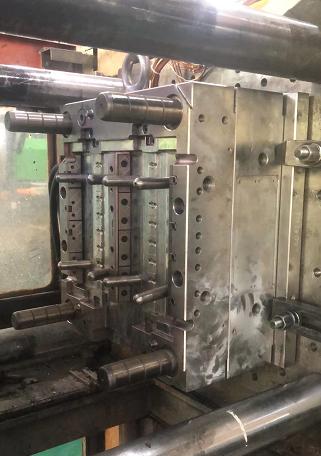
An injection mold trial report should tell buyers much more than whether the mold produced a few good samples.
A useful report should show how the mold actually performed during the trial. It should record the machine, material, molding conditions, cycle time, part quality, dimensional results, mold problems, and the next actions.
For buyers, the key question is simple:
Did the trial prove that the mold is moving toward stable production, or did it only produce a few acceptable parts under carefully adjusted conditions?
That difference matters.
What Is an Injection Mold Trial Report?
An injection mold trial report records the main conditions and results from a mold trial.
Depending on the project, it may include:
- Trial date
- Mold number
- Trial stage, such as T1, T2, or T3
- Injection molding machine
- Raw material
- Material drying conditions
- Mold temperature
- Melt temperature
- Injection speed
- Injection pressure
- Holding pressure
- Holding time
- Cooling time
- Cycle time
- Part weight
- Sample quantity
- Appearance problems
- Dimensional results
- Mold problems
- Required modifications
The report does not need to become a huge document.
However, it should contain enough information to explain what happened during the trial.
Injection Mold Trial Report Should Identify the Trial Stage
Buyers should first check whether the report clearly states which trial it represents.
T1, T2, and later trials have different purposes.
For example, T1 often focuses on whether the mold can:
- Fill the part
- Open and close correctly
- Eject the part
- Operate sliders and lifters
- Run without interference
- Produce an initial complete sample
At this stage, dimensions and appearance may still need improvement.
By T2 or T3, buyers should expect more problems to have been corrected.
Therefore, do not judge every mold trial by exactly the same standard.
The more useful question is whether the mold is improving from one trial to the next.
Check Which Injection Molding Machine Was Used
The report should record the molding machine.
Important information may include:
- Machine tonnage
- Screw diameter
- Maximum injection capacity
- Machine model
This matters because the same mold may behave differently on different machines.
For example, a mold tested on a machine that is much larger than the buyer’s final production machine may produce different results.
Injection speed control, pressure response, screw size, and clamp performance can all affect molding.
Therefore, machine information gives buyers useful context when reviewing trial results.
It also helps when the mold later moves to another factory.
Material Information Should Be Clear
An injection mold trial report should show exactly which resin was used.
Do not accept a vague description such as:
Material: ABS
A better record would identify the actual grade.
For example:
Material: SABIC CYCOLAC MG47 ABS
Depending on the project, the supplier should also record:
- Material grade
- Manufacturer
- Color
- Material lot
- Regrind percentage, if any
- Drying temperature
- Drying time
This becomes especially important for PA, PC, PBT, PET, and other materials that absorb moisture.
If the final production material differs from the trial material, the trial result may not fully represent future production.
Injection Mold Trial Report Should Include Main Process Settings
A trial report without molding parameters is incomplete.
Buyers do not need every machine screen printed into the report. However, the main settings should be recorded.
These normally include:
- Melt temperature
- Mold temperature
- Injection speed
- Injection pressure
- Holding pressure
- Holding time
- Cooling time
- Back pressure
- Screw speed
The purpose is not simply to collect numbers.
Instead, these settings help explain how difficult the mold was to run.
For example, if the mold only fills at unusually high pressure, that may indicate:
- A gate that is too small
- Poor venting
- Excessive flow length
- Runner restriction
- Low material temperature
- Another filling problem
A good mold trial report gives buyers enough information to ask the right questions.
Do Not Look Only at the Final Settings
This is an important point.
Sometimes the final molding parameters look reasonable because the technician spent hours finding one condition that works.
That does not automatically mean the process is stable.
Buyers should ask whether the mold can run within a reasonable range.
For example, does a small reduction in holding pressure immediately create sink marks?
Does a small increase in injection pressure create flash?
If so, the process may have a narrow operating range.
This is closely related to the injection molding process window.
A good trial should move the mold toward a stable process rather than one very sensitive setting.
Cycle Time Should Be Recorded
Cycle time is another basic item buyers should check.
The report should show the actual cycle used during the trial.
However, the number alone is not enough.
Ask whether the cycle is realistic.
For example, a supplier may use a very long cooling time during T1 just to remove the part safely.
That may be acceptable during an early trial.
However, before final approval, the cycle should move closer to the expected production target.
If cycle time remains much longer than expected, the cause should be identified.
Common reasons include:
- Poor cooling
- Thick sections
- Part sticking
- Slow ejection
- Manual mold operation
- Unstable part dimensions
Part Weight Can Reveal Process Stability
Part weight is a simple but useful value.
If the process is stable, part weight should normally remain within a reasonably tight range.
Large variation may indicate changes in:
- Filling
- Packing
- Cushion
- Material feeding
- Gate freeze
- Check ring performance
For multi-cavity molds, cavity-by-cavity part weight can also reveal filling imbalance.
Therefore, part weight is worth including in an injection mold trial report, especially for precision or functional parts.
Injection Mold Trial Report Should Record Visible Defects
Do not accept a report that simply says:
Part appearance: OK
The report should identify actual defects found during the trial.
Typical problems include:
- Flash
- Short shots
- Sink marks
- Weld lines
- Burn marks
- Flow marks
- Jetting
- Silver streaks
- Drag marks
- Ejector marks
- Warpage
- Surface scratches
Not every defect means the mold has failed.
T1 parts often have several issues.
What matters is whether the supplier identifies the problems clearly and proposes the correct actions.
A good report does not hide defects.
It explains them.
Separate Mold Problems From Process Problems
This is one of the most useful parts of evaluating a mold trial.
Not every defect should lead to a mold modification.
For example, a short shot may come from:
- Low injection speed
- Low material temperature
- Poor venting
- Small gate
- Runner imbalance
The first two may be process-related.
The last three may require mold work.
Likewise, flash may come from excessive pressure, but it may also come from poor fitting or a weak shut-off.
Therefore, the report should not only list the defect.
It should also include the suspected cause.
This prevents unnecessary mold changes.
Dimensional Results Need More Than Pass or Fail
An injection mold trial report should link to a dimensional inspection report when dimensions matter.
Buyers should not only look for green “PASS” marks.
Look at the actual numbers.
Suppose a drawing requires:
50.00 ±0.10 mm
The measured result is:
50.09 mm
Technically, the dimension passes.
However, it is already close to the upper limit.
That deserves attention.
The better question is:
Is the dimension comfortably inside tolerance, or is it barely passing?
This becomes more important during mass production, where material, temperature, and process conditions can change slightly.
For more detail, see our guide on injection molding dimensional stability.
Multi-Cavity Molds Should Be Checked by Cavity
For a multi-cavity mold, mixed sample data can hide problems.
Suppose an 8-cavity mold produces acceptable average dimensions.
However, cavity 7 is consistently larger than the other seven cavities.
If all samples are mixed, that difference may not be obvious.
Therefore, buyers should ask whether the report separates important results by cavity.
Useful cavity-based checks include:
- Part weight
- Critical dimensions
- Flash
- Short shots
- Appearance
- Functional testing
This makes it much easier to determine whether a problem affects one cavity or the whole mold.
For more detail, see Multi-Cavity Injection Molding: Trace Defects by Cavity.
Check Whether the Mold Reached a Stable Temperature
A few good parts produced immediately after startup do not prove much.
Mold temperature changes during the first part of a production run.
As the mold reaches thermal balance, part dimensions, shrinkage, warpage, and appearance may also change.
Therefore, buyers should ask:
- How long did the mold run?
- How many shots were produced?
- Were dimensions checked after the mold became stable?
- Were samples taken at different times?
This is especially important for large molds and precision parts.
A mold that makes good parts for 10 shots may behave differently after 300 shots.
Injection Mold Trial Report Should Record Mold Operation
Part quality is only one side of a mold trial.
The mold itself also needs to operate correctly.
The report should note problems with:
- Mold opening
- Mold closing
- Ejection
- Sliders
- Lifters
- Hydraulic cylinders
- Core pulling
- Hot runner system
- Water leakage
- Oil leakage
- Abnormal noise
For example, a part may look perfect while one slider is already rubbing heavily.
That problem may become much worse during long production.
Therefore, buyers should evaluate both the plastic parts and the mold operation.
Look at Ejection Carefully
Ejection problems are often easy to hide during a short trial.
An operator may manually help remove the part.
That may be acceptable while checking an early T1 sample, but it is not acceptable for stable automatic production.
Buyers should check whether:
- The part releases consistently
- Ejector pins leave acceptable marks
- The part stays on the correct mold side
- No manual assistance is required
- Lifters return correctly
- The robot can remove the part if automation is required
A final mold trial should reflect the intended production method as closely as possible.
Cooling Problems Should Appear in the Report
Cooling problems may not create an obvious defect immediately.
Instead, they may show up as:
- Long cycle time
- Warpage
- Uneven shrinkage
- Hot spots
- Dimensional drift
If one area of the part remains much hotter than another, the supplier should investigate the cooling system.
For complex molds, the trial report can also record mold inlet and outlet water temperatures.
This helps show whether the cooling circuit is functioning as expected.
Every Problem Should Have a Clear Action
This is where a good injection mold trial report becomes useful.
A simple problem list is not enough.
Each important issue should have a proposed action.
For example:
| Problem | Possible Cause | Action |
|---|---|---|
| Flash at slider | Shut-off fitting | Refit slider shut-off |
| Sink at boss | Packing/gate | Optimize holding pressure and check gate |
| Short shot | Poor venting | Add vent |
| Dimension high | Local steel condition | Review measurement before steel change |
| Drag mark | Insufficient draft | Polish or modify local area |
This makes the next step clear for both buyer and supplier.
Avoid Cutting Steel Too Quickly
After T1, buyers often want every dimensional problem corrected immediately.
However, mold changes should be made carefully.
Plastic parts shrink after molding, and some materials continue changing for a period of time.
Measurement conditions also matter.
Before removing steel, confirm:
- Sample conditioning time
- Material condition
- Mold temperature
- Process stability
- Measurement method
- Drawing tolerance
Once steel is removed, adding it back usually requires welding or an insert change.
Therefore, dimensional changes should be based on reliable data rather than one early sample.
Compare T1, T2 and T3 Reports
One report gives you a snapshot.
Several reports show progress.
For example:
| Issue | T1 | T2 | T3 |
|---|---|---|---|
| Flash | Major | Slight | Closed |
| Short shot | Yes | No | No |
| Dimension A | High | Improved | Pass |
| Ejection | Manual help | Improved | Automatic |
| Cycle time | 48 sec | 41 sec | 36 sec |
This makes mold development much easier to understand.
If the same issue appears in every trial without improvement, buyers should ask why.
Sample Photos Make the Report More Useful
Photos are useful when they clearly show the defect.
For example:
- Flash location
- Sink mark
- Weld line
- Burn mark
- Ejection mark
- Slider line
The supplier can mark the defect directly on the image.
That is much clearer than writing:
“Surface issue on side area.”
The buyer and moldmaker can then discuss the same location without confusion.
Do Not Approve a Mold Based Only on a Trial Report
An injection mold trial report is important, but it is not the entire acceptance process.
Before final shipment, buyers should also review:
- Part inspection results
- Mold condition
- Mold drawings
- Steel information
- Cooling
- Spare parts
- Final mold modifications
- Production stability
Our Injection Mold Acceptance Checklist covers these points in more detail.
The final trial should support mold acceptance rather than replace it.
What Should Buyers Check in an Injection Mold Trial Report?
A practical review can focus on these items:
| Item | What Buyers Should Check |
|---|---|
| Trial stage | T1, T2, T3 or final trial |
| Machine | Tonnage and machine information |
| Material | Exact resin grade and drying |
| Process | Main molding parameters |
| Cycle time | Actual and target cycle |
| Part weight | Stability and cavity balance |
| Appearance | Defects clearly recorded |
| Dimensions | Actual measurements, not only PASS |
| Mold operation | Ejection, sliders, lifters, leakage |
| Trial duration | Enough time to reach stability |
| Problems | Clear issue list |
| Actions | What will change before next trial |
The report should also become part of the final injection mold documentation. Fentor Mold’s documentation guide likewise treats T1 or mold-trial reports as part of the mold delivery records.
Final Thoughts
A good injection mold trial report should help buyers understand what really happened during the mold trial.
It should show the machine, material, process settings, cycle time, part condition, dimensional results, mold operation, and remaining problems.
More importantly, it should show what happens next.
T1 does not need to be perfect.
However, each trial should provide useful information and move the mold closer to stable production.
A few carefully selected good samples are not enough.
The better question is whether the trial data shows that the mold can eventually produce acceptable parts repeatedly under a reasonable production process.
That is what buyers should look for when evaluating a mold trial.